1. Overview
Energy Recovery Ventilation (ERV) systems are widely used in North American residential, multifamily, and commercial HVAC applications where airtight building envelopes require controlled mechanical ventilation.
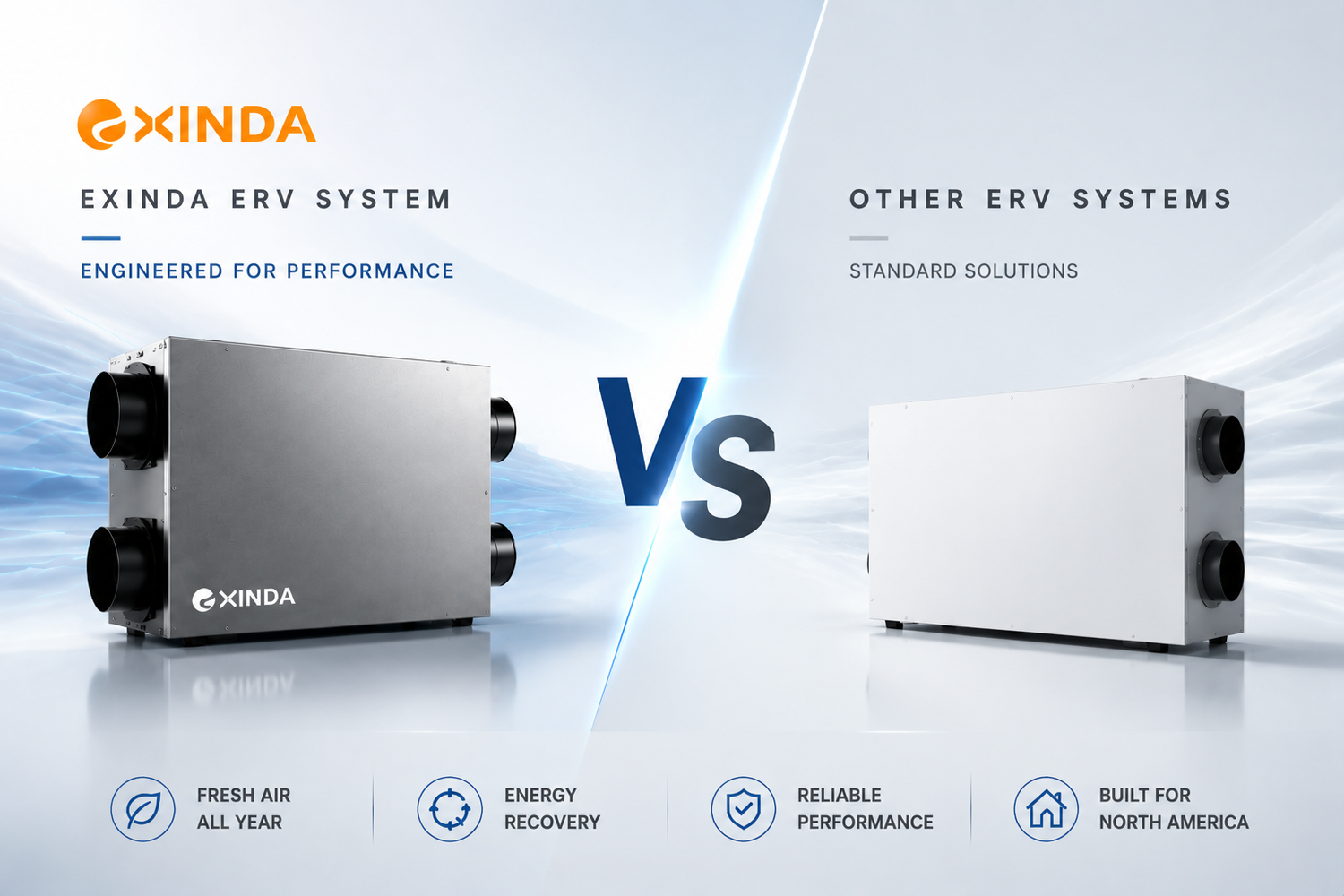
Lifebreath ERV systems are commonly referenced in North American residential ventilation markets and are widely applied in standard ducted HVAC installations.
EXINDA ERV systems are engineered for HVAC projects requiring stable airflow performance, system integration flexibility, and engineering submittal support for North American building requirements.
This document provides a technical review of ERV system behavior based on real HVAC design conditions including airflow performance, energy recovery characteristics, installation environment, and compliance requirements.
2. System Working Principle
Both EXINDA and Lifebreath ERV systems operate using the same ventilation principle:
- Balanced supply and exhaust air streams
- Energy exchange through a heat recovery core
- No direct air mixing between air streams
- Pre-conditioned fresh air delivered into occupied spaces
System performance is influenced by duct design, static pressure conditions, and installation environment in real HVAC applications.
3. Engineering Airflow Performance (Real HVAC Conditions)
In North American residential HVAC applications, airflow is typically evaluated under duct resistance conditions around 0.4 in.w.g static pressure.
EXINDA C90-class systems are designed to deliver approximately 100 CFM under these conditions, supporting standard residential ventilation requirements in single-family applications.
In comparable residential applications, Lifebreath METRO 120 series systems are typically referenced in the range of approximately 120–125 CFM depending on configuration and installation conditions.
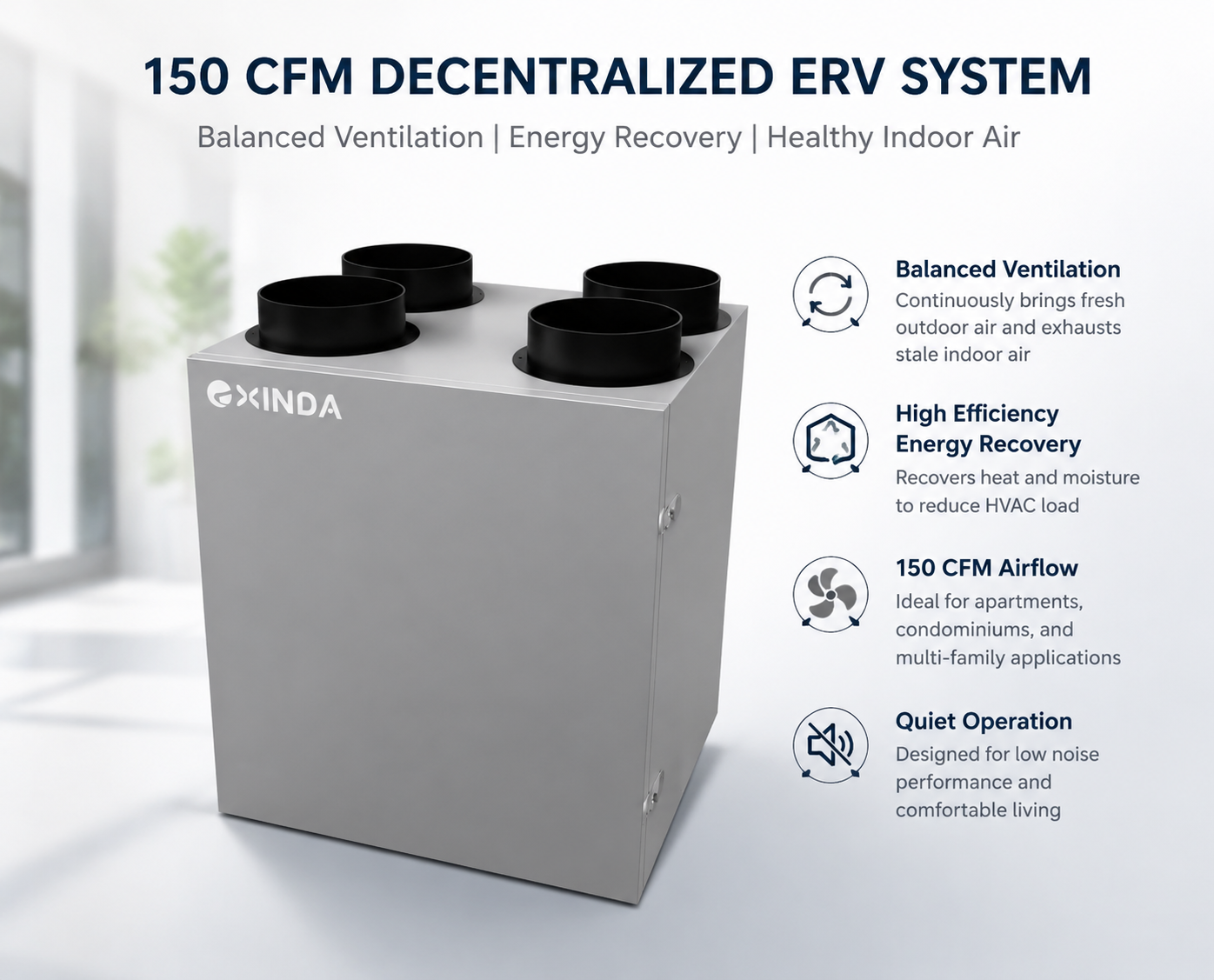
For higher airflow applications, EXINDA C150-class systems are designed to achieve approximately 136 CFM under similar static pressure conditions, supporting multifamily and light commercial HVAC requirements where duct resistance is typically higher.
4. Energy Recovery Performance (Seasonal Operation)
ERV systems recover energy from exhaust air in two forms:
- Sensible energy (temperature exchange)
- Latent energy (humidity balance)
System performance varies depending on climate conditions, airflow balance, and seasonal HVAC load profiles.
Under standard winter conditions around 0°C, EXINDA C90-class systems typically operate in the mid-to-high 70% range of energy recovery efficiency depending on system configuration and airflow conditions.
Lifebreath ERV systems operate within a similar efficiency range depending on model selection and motor configuration.
At low-temperature conditions such as -25°C, system performance depends on defrost strategy and airflow control logic. EXINDA systems are designed for stable airflow operation in cold climate conditions commonly found in Canada and northern US regions.
5. Motor Technology & Power Consumption
ERV system energy consumption is influenced by motor type, airflow demand, and duct system resistance.
EXINDA ERV systems use BLDC (ECM) motor technology designed for controlled airflow operation and energy-efficient performance under variable load conditions.
In residential applications, EXINDA C90 systems typically operate around 30W under standard conditions, while higher capacity systems adjust power consumption based on airflow demand.
Lifebreath ERV systems use different motor configurations depending on model selection, including PSC and ECM options, which affect power consumption characteristics under similar airflow conditions.
6. Installation & System Integration
ERV system installation performance depends on:
- Duct layout design and complexity
- Static pressure conditions
- Retrofit or new construction application
- Air balancing and commissioning requirements
Lifebreath systems are widely used in standard residential ventilation applications across North America.
EXINDA ERV systems are designed for flexible installation conditions, supporting both compact residential applications and distributed ventilation systems in multifamily and commercial HVAC projects.
7. Climate Application in North America
ERV system selection is strongly influenced by climate conditions:
- Cold climates (Canada / Northern US): heat recovery priority
- Mixed climates (Central US): balanced ventilation strategy
- Humid climates (Southern US): moisture control focus
Both EXINDA and Lifebreath systems are applied across these climate zones depending on HVAC design requirements and building envelope conditions.
8. Compliance & Engineering Standards
ERV systems in North America are typically evaluated under the following standards:
- ASHRAE 62.2 (Residential ventilation requirements)
- ASHRAE 62.1 (Commercial ventilation design)
- IRC mechanical ventilation codes
- IECC energy efficiency requirements
- HVI airflow performance standards
- CSA / cCSAus safety certification requirements
These standards define baseline requirements for HVAC system approval and engineering submittal documentation.
9. EXINDA Engineering System Support Layer
EXINDA ERV systems are designed to support HVAC engineering workflows through:
- CFM and static pressure-based system selection
- Engineering submittal documentation support
- Installation and commissioning guidance
- Project-based technical support for contractors and distributors
This supports HVAC professionals in residential, multifamily, and commercial project execution across North American markets.
10. Project Information Requirement
For engineering evaluation and system selection, the following information is typically required:
Building type (residential, multifamily, or commercial), project location (USA or Canada), airflow requirement in CFM, duct static pressure conditions if available, HVAC system type, and project stage (design, construction, or retrofit).
Engineering Contact
EXINDA Group – HVAC Engineering Division
Email: info@exindagroup.com
11. FAQ
What is the difference between ERV and HRV in North America?
ERV systems transfer both heat and moisture, while HRV systems transfer heat only. ERV systems are commonly selected in mixed and humid climates where humidity control is required in airtight buildings.
When should ERV systems be used instead of HRV systems?
ERV systems are typically used in climates where both ventilation and humidity control are required, while HRV systems are more commonly applied in colder and drier climates depending on HVAC design requirements.
How is ERV system size selected?
ERV system sizing is based on airflow requirements (CFM), building size, occupancy load, and duct static pressure conditions. Final selection is typically confirmed during HVAC engineering submittal stages.
Are Lifebreath ERV systems widely used in North America?
Lifebreath ERV systems are widely applied in North American residential ventilation projects and are commonly used in standard HVAC system designs.
How does EXINDA support HVAC projects?
EXINDA provides engineering ERV systems with support for airflow (CFM) selection, static pressure (ESP) matching, and submittal documentation for residential, multifamily, and commercial HVAC applications.
What standards apply to ERV systems in the USA and Canada?
Common standards include ASHRAE 62.2, ASHRAE 62.1, IRC ventilation codes, IECC energy standards, HVI airflow testing requirements, and CSA safety certifications.