
The best ERV for Calgary is not simply the unit with the highest published airflow. For builders, HVAC contractors, and project developers, the right choice must combine suitable ventilation capacity, cold-weather operation, field balancing access, installation flexibility, and clear compliance documentation.
Calgary’s new homes are becoming more airtight and more energy-efficient. That improves heating efficiency, but it also increases the need for controlled fresh-air ventilation. A properly selected energy recovery ventilator (ERV) provides balanced ventilation while recovering heat and moisture that would otherwise be exhausted from the home.
For Alberta projects, the selection process should start with the building, the design airflow, and the documentation required for approval—not with CFM alone.
Calgary New-Home ERV Selection at a Glance
| Builder requirement | Why it matters in Calgary | What to verify |
|---|---|---|
| Balanced fresh-air ventilation | Airtight homes need controlled outdoor-air supply and stale-air exhaust | Design airflow, duct layout, and balancing method |
| Cold-weather operation | Winter conditions can create frost risk within the ventilation system | Defrost strategy and operating limitations |
| Suitable airflow at static pressure | Installed ductwork creates resistance that can reduce delivered airflow | Airflow data at project-relevant external static pressure |
| Certification documentation | Builders and inspectors need traceable product information | HVI certification, CSA certificate, submittal, and electrical marking |
| Installation fit | Mechanical-room, ceiling-cavity, and duct-routing limits vary by project | Side-port or top-port configuration and service clearance |
| Commissioning support | Final airflow adjustment affects comfort and ventilation performance | Balancing ports, dampers, and commissioning instructions |
What Alberta Builders Need to Consider
Alberta’s current building code is the National Building Code – 2023 Alberta Edition. Residential ventilation requirements should be reviewed against the applicable project path, local authority requirements, and the final mechanical design.
For single-family and low-rise housing, the system must provide the intended whole-home ventilation rate and allow the installed airflow to be balanced. For multi-family, centrally served, or engineered projects, the mechanical consultant should confirm the applicable code path and design criteria.
A good ERV specification should answer these practical questions:
- What airflow is required for this home and occupancy?
- Can the unit deliver that airflow after duct resistance is considered?
- How will the system manage frost conditions in winter?
- Can the installer access the unit for balancing, filter service, and commissioning?
- Is the documentation clear enough for the builder, inspector, and electrical review process?
HVI and CSA Documentation: What Builders Need
HVI and CSA certifications support different parts of the builder’s product-review process. HVI focuses on independently verified ventilation performance. CSA documentation confirms the product’s certification category for Fans and Blowers in Canada and the United States.
| Certification | What it means | Correct EXINDA wording |
| HVI Certified | Independently verified ventilation performance data, including airflow, sound, and energy-related ratings | HVI Certified residential ERV |
| CSA Class 3812-01 | Canadian CSA certification category for Fans and Blowers | CSA Certified under Class 3812-01 — Fans and Blowers (Canada) |
| CSA Class 3812-81 | CSA certification category for Fans and Blowers — Certified to U.S. Standards | CSA Certified under Class 3812-81 — Fans and Blowers, Certified to U.S. Standards |
EXINDA ERVs are HVI Certified for independently verified ventilation performance and CSA Certified under Class 3812-01 — Fans and Blowers (Canada) — and Class 3812-81 — Fans and Blowers, Certified to U.S. Standards.
Why HVI and CSA Matter for Calgary Projects
For the best ERV for Calgary, builders need both performance confidence and product-certification documentation.
HVI certification helps builders and HVAC contractors compare published ventilation performance using independently verified data. CSA certification under Class 3812-01 provides Canadian product-certification documentation for the fan-and-blower category, while Class 3812-81 confirms certification to U.S. standards.
This documentation is especially useful when a project team is reviewing submittals, preparing permit documents, or comparing ERV suppliers.
Selecting the Right Airflow Range for New Homes
The right ERV capacity depends on the home’s size, bedroom count, occupancy profile, duct design, and required ventilation rate. Oversizing without proper balancing can create unnecessary sound, energy use, and comfort issues. Undersizing can prevent the home from achieving its intended ventilation performance.
| Typical project need | Practical ERV selection approach |
| Compact detached home or townhouse | Select the unit based on required continuous ventilation rate and available duct routing |
| Standard detached new home | Prioritize airflow at design static pressure, balancing access, and serviceability |
| Larger detached home | Confirm required airflow, duct sizing, and operating sound at the selected setting |
| Multi-family suite | Confirm the project ventilation design, unit location, condensate requirements, and electrical documentation |
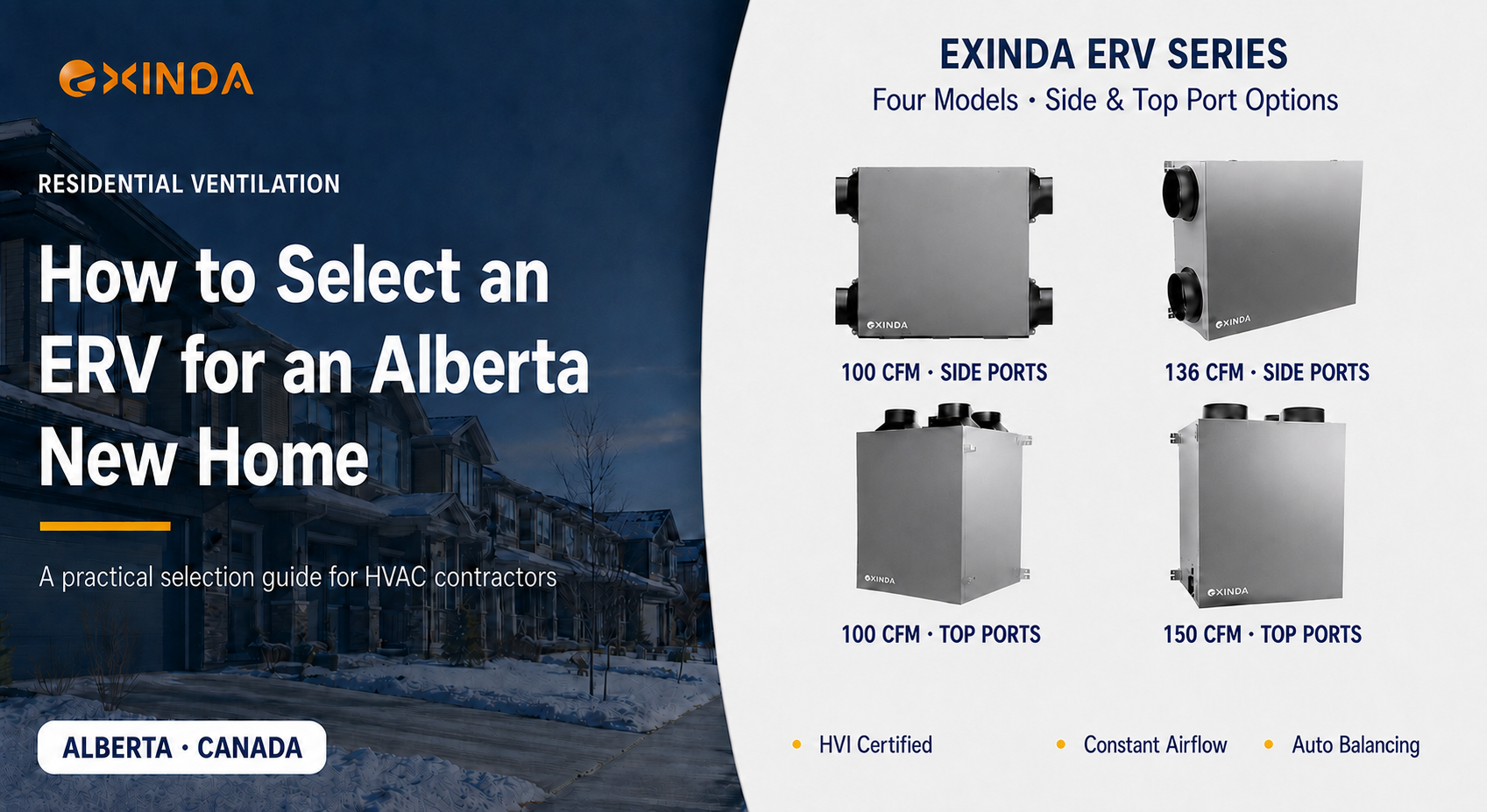
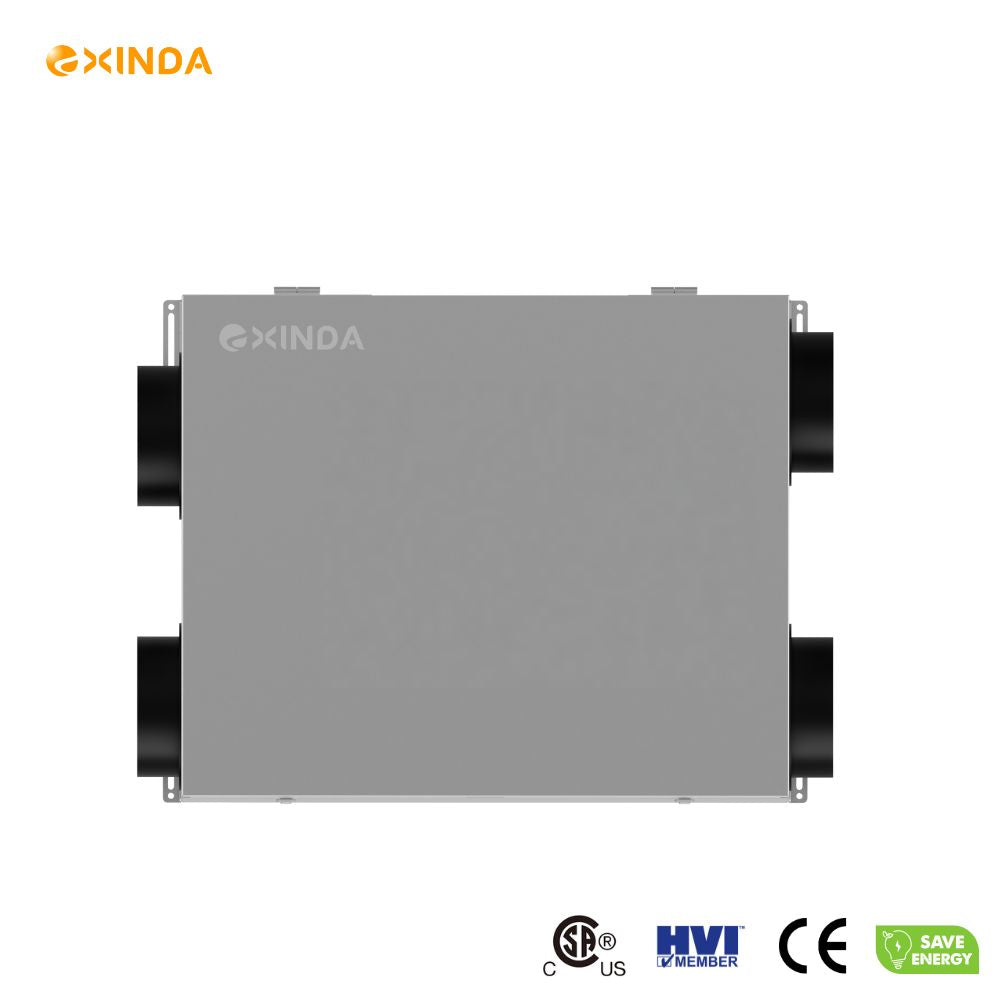
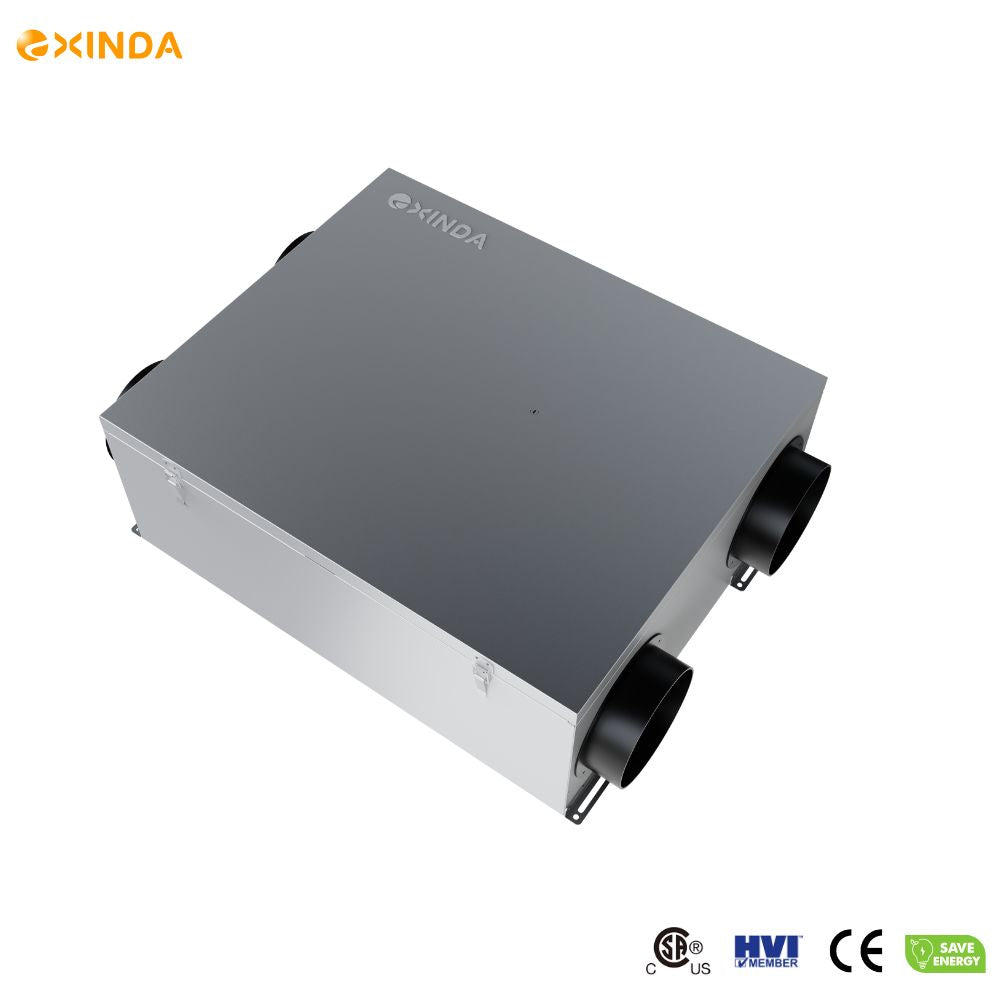
EXINDA offers residential ERV configurations in approximately the 90–170 CFM range, including side-port and top-port layouts. This gives contractors flexibility to match the unit to duct routing and mechanical-room constraints rather than forcing every project into one installation format.
ERV Features That Matter in Calgary’s Cold, Dry Climate
| EXINDA selection feature | Builder benefit |
| Heat and moisture recovery | Reduces ventilation-related heating loss while supporting more stable indoor comfort |
| ECM constant-airflow technology | Helps maintain intended airflow as duct resistance changes |
| Field balancing and commissioning access | Supports correct final setup before handover |
| Side-port and top-port options | Helps fit different mechanical-room and ceiling-installation layouts |
| MERV 8 filtration | Supports basic filtration of incoming outdoor air |
| Cold-weather operation and frost control | Supports operation in cold Alberta conditions when selected and installed according to project requirements |
| HVI and CSA certification documentation | Makes product review and compliance documentation more straightforward |
How EXINDA Supports Alberta Builders
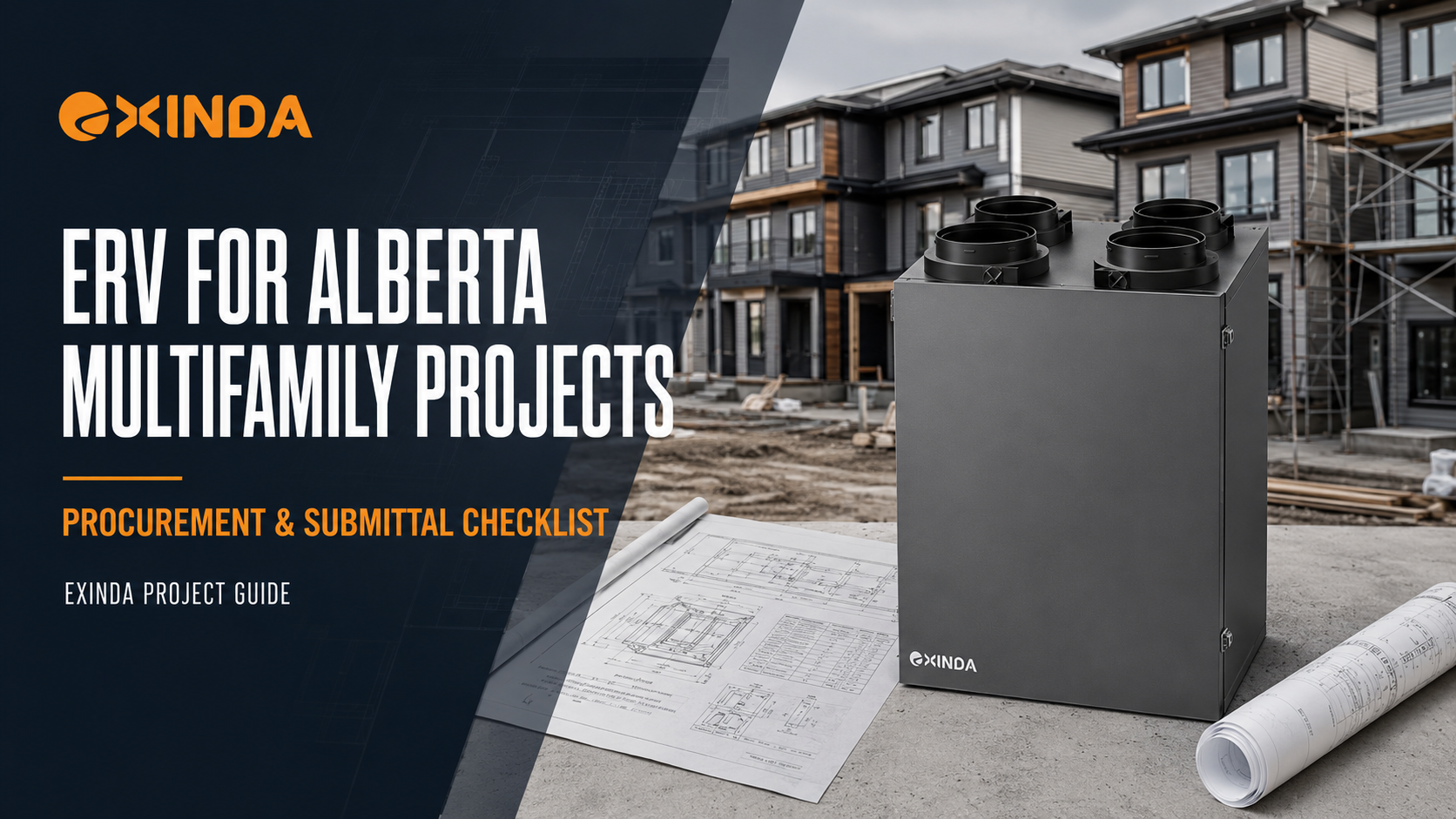
EXINDA residential ERVs are designed for North American new-construction applications where reliable ventilation, installation flexibility, and documentation matter. The range includes compact and higher-airflow side-port and top-port options for detached homes, townhomes, and applicable multi-family suites.
For a Calgary project, the EXINDA selection process should include:
- Required continuous ventilation airflow;
- Duct layout and estimated external static pressure;
- Ceiling or wall installation location;
- Required service and filter-access clearance;
- Cold-weather and frost-control requirements;
- Model-specific HVI, CSA, and submittal documentation;
- Final field balancing and commissioning plan.
The goal is not simply to install an ERV. It is to deliver a balanced ventilation system that can be installed efficiently, documented clearly, and commissioned correctly.
Frequently Asked Questions
Is HVI certification required by Alberta code?
HVI certification is not typically a prescriptive Alberta Building Code requirement by name. However, HVI-certified data is valuable because it provides independently verified performance information that builders, designers, and contractors can use when selecting ventilation equipment.
What does CSA Class 3812-01 mean for an ERV?
CSA Class 3812-01 identifies the Canadian certification category for Fans and Blowers. For an ERV, it provides Canadian CSA certification documentation for the product’s fan-and-blower category.
Should a builder select an ERV by CFM only?
No. The best ERV for Calgary should be selected using required airflow, static pressure, frost-control approach, installation layout, sound expectations, certification documentation, and final balancing requirements.
Specify an EXINDA ERV for Your Alberta Project
For Calgary, Edmonton, and Central Alberta new-home projects, EXINDA provides HVI-certified and CSA-certified residential ERVs with side-port and top-port configurations from approximately 90 to 170 CFM.
Contact EXINDA for model selection, product submittals, certification documentation, and builder or contractor support for your next Alberta ventilation project.
Compliance note: Final product selection, installation, electrical approval, ventilation design, and inspection requirements should always be confirmed with the project mechanical designer, local authority having jurisdiction, and the model-specific EXINDA documentation.