1. PROJECT
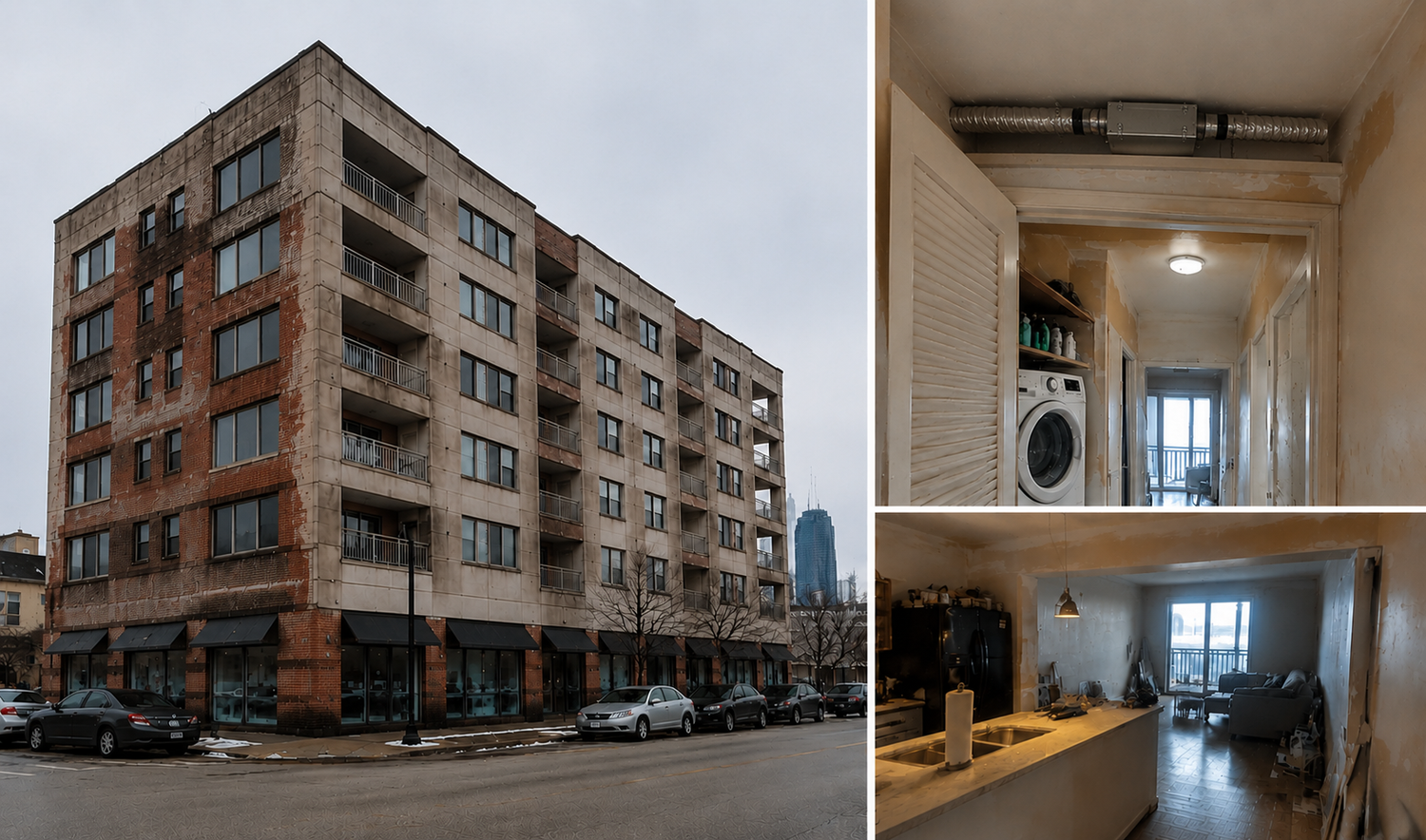
A mid-rise multi-family apartment building located in Denver, Colorado required a mechanical ventilation upgrade to improve indoor air quality and maintain compliance with ASHRAE 62.2 residential ventilation requirements while operating within strict architectural and mechanical space constraints.
The project consisted of approximately 145,000 sq ft of residential building area and 118 apartment units, requiring a consistent and balanced decentralized ventilation strategy to ensure stable fresh air delivery across all occupied spaces.
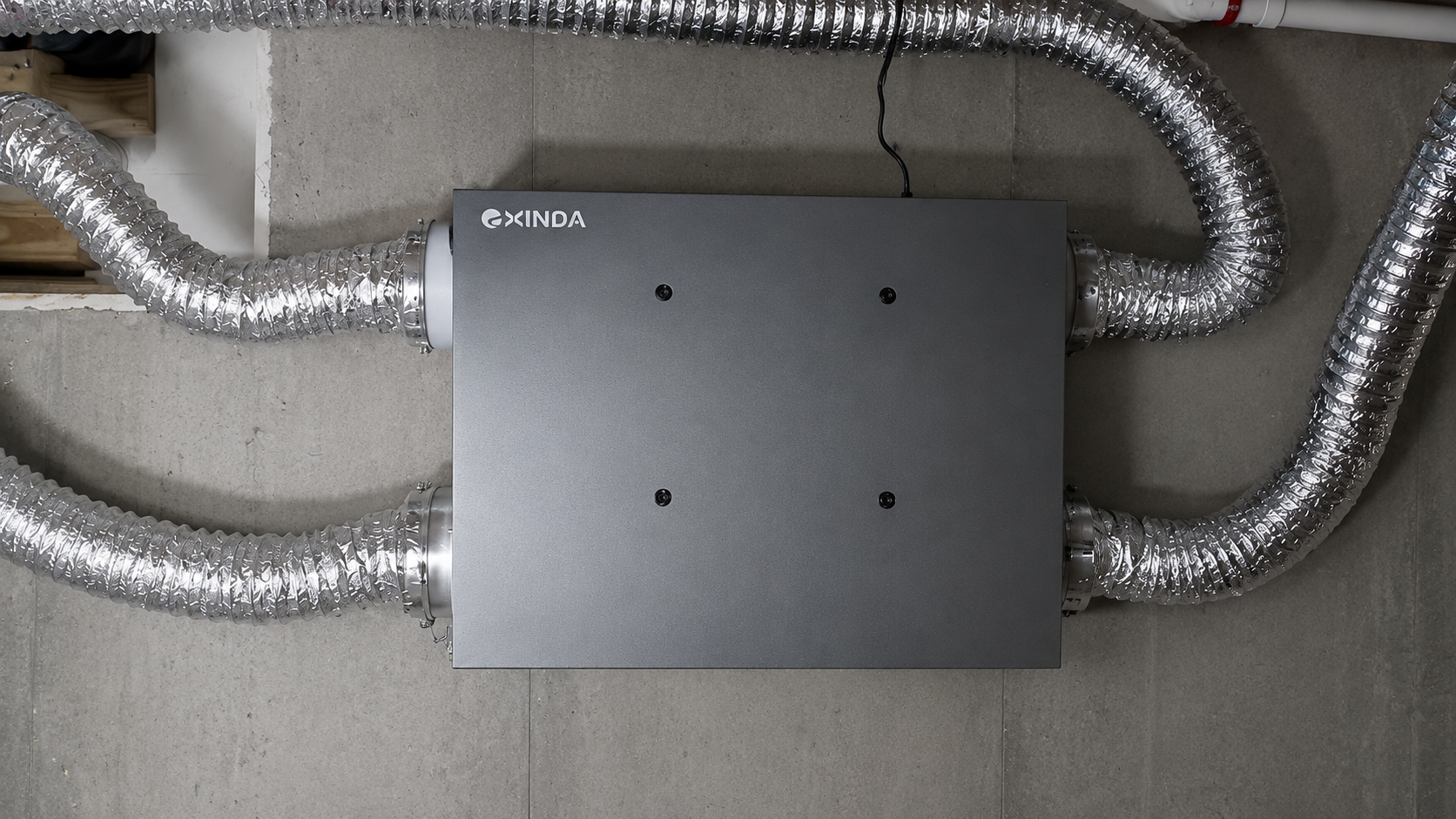
EXINDA ERV-150 was selected as the primary ventilation solution due to its compact ceiling-mounted design, decentralized airflow architecture, and ASHRAE-compliant energy recovery performance.
Project Summary
| Category | Specification |
|---|---|
| Project Type | Mid-Rise Multi-Family Residential |
| Location | Denver, Colorado, USA |
| Building Size | 145,000 sq ft |
| Units Served | 118 Apartments |
| Ventilation Strategy | Decentralized ERV System |
| Airflow Design | 134 CFM per unit |
| Equipment | EXINDA ERV-150 |
| Key Constraint | Limited utility closet and ceiling installation space |
| Compliance Target | IECC / ASHRAE 62.2 / Colorado Energy Code |
2. DESIGN CHALLENGE
2.1 Engineering Constraint
In Denver’s cold and dry winter climate, residential ventilation systems must deliver continuous fresh air while maintaining energy efficiency and occupant comfort. However, in retrofit and mid-rise residential developments, mechanical system design is often constrained by limited ceiling and utility closet space, as well as strict energy performance requirements.
In this project, the design team faced several critical constraints:
- Extremely limited utility closet space for mechanical equipment
- Tight building envelope increasing sensitivity to indoor air quality fluctuations
- Requirement for continuous fresh air ventilation under ASHRAE 62.2
- Need to control long-term operating energy consumption for property owners
Conventional ceiling-mounted or ducted ERV systems were evaluated but presented installation and spatial conflicts due to equipment depth and duct routing requirements.
2.2 Code & Regulatory
Engineered specifically to satisfy the balanced ventilation rate requirements of ASHRAE 62.2, while supporting compliance with the IECC and Colorado Energy Code for multi-family residential ventilation and energy performance.
2.3 Field Pain Points
Eliminates common multi-family installation challenges including limited utility closet space conflicts, ceiling congestion issues, and airflow imbalance during commissioning through an integrated auto-balancing ECM system designed for simplified installation and stable operation.
3. COMPETITOR DESIGN CONTEXT
3.1 Standard Industry Baseline
Traditional residential ventilation systems in similar mid-rise apartment applications typically rely on centralized or semi-centralized ERV configurations, which require:
- Larger dedicated mechanical or utility space
- Extensive duct routing through constrained ceiling zones
- Manual airflow balancing (TAB) during commissioning
- Higher installation labor dependency in retrofit conditions
These limitations reduce feasibility in projects where mechanical space is already restricted by architectural design constraints.
3.2 Brand Comparison
4. ENGINEERING SOLUTION
4.1 System Architecture
The EXINDA ERV-150 system is based on a decentralized in-unit ventilation architecture, where each apartment operates an independent energy recovery ventilation unit.
This design eliminates reliance on centralized duct risers and reduces cross-unit airflow interference, making it suitable for high-density residential developments with limited mechanical space availability.
4.2 Product Engineering Features
The EXINDA ERV-150 deployed in this project includes the following engineering characteristics:
- High-efficiency energy recovery core for sensible heat transfer
- ECM motor technology for low energy consumption operation
- Compact footprint optimized for ceiling-mounted installation
- Integrated auto-balancing airflow control system
- Simplified installation design suitable for constrained utility spaces
- Continuous balanced airflow delivery at 134 CFM per unit
5. TECHNICAL COMPARISON
| Parameter | Conventional ERV System | EXINDA ERV-150 |
|---|---|---|
| Installation Depth | Larger ceiling/utility space required | Compact ceiling-mounted design |
| Airflow Balancing | Manual TAB required | Auto-balancing ECM system |
| System Architecture | Centralized duct system | Decentralized in-unit system |
| Installation Complexity | High | Reduced |
| Commissioning Effort | High field adjustment required | Simplified commissioning |
| Retrofit Suitability | Limited in constrained spaces | High |
6. INSTALLATION OUTCOME
Structural Impact
The compact ceiling-mounted design allowed full system integration without requiring expansion of utility closet space or structural modifications, preserving the original architectural layout of the building.
Construction Efficiency
The integrated auto-balancing system reduced manual airflow balancing requirements during commissioning, significantly simplifying installation workflow across all residential units.
Ventilation Performance
Consistent balanced ventilation was achieved across all 118 apartments, supporting compliance with ASHRAE 62.2 indoor air quality requirements under seasonal operating conditions.
Energy Performance
The high-efficiency energy recovery core reduced ventilation-related heating loads during Denver’s cold winter conditions, contributing to improved long-term building energy efficiency and reduced operational energy consumption.
7. ENGINEERING INSIGHT
In modern mid-rise residential ventilation design, mechanical installation space has become a primary determining factor in system selection, often exceeding airflow capacity considerations in design priority.
Decentralized compact ERV systems provide a practical engineering response by decoupling ventilation performance from limited utility and ceiling space constraints, enabling code-compliant fresh air delivery in high-density residential environments.
8. WHY EXINDA
EXINDA ERV systems are increasingly specified in North American multi-family residential projects due to their ability to:
- Address severe mechanical and ceiling space constraints in retrofit and new construction projects
- Support compliance with ASHRAE 62.2, IECC, and regional energy codes
- Reduce installation complexity in space-limited utility environments
- Minimize commissioning effort through factory-calibrated airflow control
- Provide scalable decentralized ventilation solutions for multi-unit developments
9. CONCLUSION
This project demonstrates that compact decentralized ERV systems are essential enabling technologies for achieving modern indoor air quality and energy compliance requirements in space-constrained residential developments.
By eliminating the need for expanded mechanical space while maintaining stable ventilation performance, EXINDA ERV-150 provides a scalable solution for mid-rise multi-family residential applications in demanding climate conditions such as Denver, Colorado.
10. ENGINEERING SUPPORT
EXINDA Engineering Team
info@exindagroup.com