Updated September 2026.
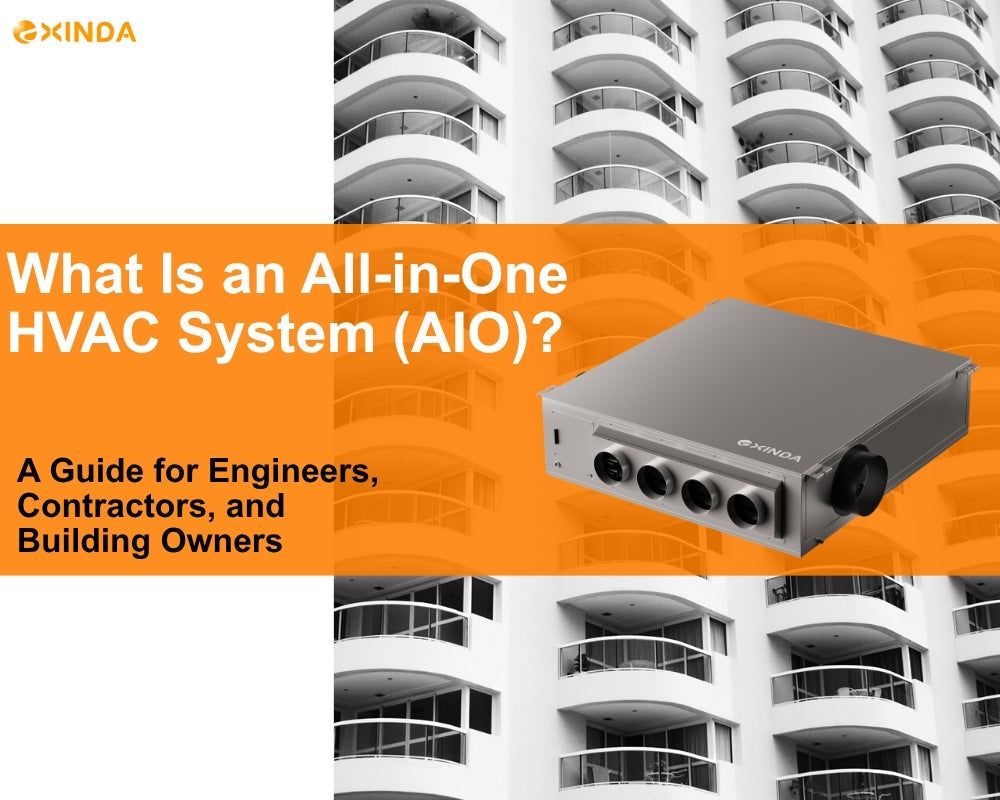
The questions usually arrive in one of four forms. The building has no place for outdoor units. The developer does not want the facade covered in condensers. Each apartment needs its own heating, cooling and fresh air. Or the engineer needs to fit conditioning and ventilation into the ceiling of a suite without a mechanical room. All four lead to the same category: a packaged heat pump that sits inside the suite and breathes through two openings in the exterior wall. In basis-of-design documents and on drawings it is written as a packaged terminal heat pump (PTHP) with integrated ERV, sometimes as a single-package heat pump (SPHP); the ducted version is specified as a ceiling ducted unit with ERV. This guide explains how that works, how to pick between the types, what to check on a datasheet, and where the main products sit.
Two brand notes first, because they cause confusion on drawings: Ephoca is Innova again (the US name reverted in 2026 after a trademark case; same products, same factory), and MRCOOL entered the category in August 2026 with a plug-in single-room monoblock.
How an all-in-one heat pump with no outdoor unit works
Compressor, both coils and the fans sit in one indoor cabinet. Two ducts run to the exterior wall: one brings outside air across the outdoor coil and the other discharges it, so the unit rejects or collects heat the same way a split system's condenser does, just from inside. Room air is drawn back to the unit, conditioned and supplied through the room or through ducts. In units with a built-in ERV, a third pair of small air streams brings filtered fresh air in through an energy recovery core and exhausts stale air from the bathroom.
"No outdoor unit" does not mean no outdoor connection. Every unit in this category still needs two wall openings with louvers, a condensate drain, an electrical supply and a service opening. Those four items decide whether a project can use this type of equipment, so check them before comparing capacities.
First decision: wall-mounted or ducted
Wall-mounted units hang on an exterior wall and condition the room they are in. One unit per room, fastest install, unit visible, noise in the room. Right for studios, retrofits with nothing above the ceiling, and rooms that each have an exterior wall.
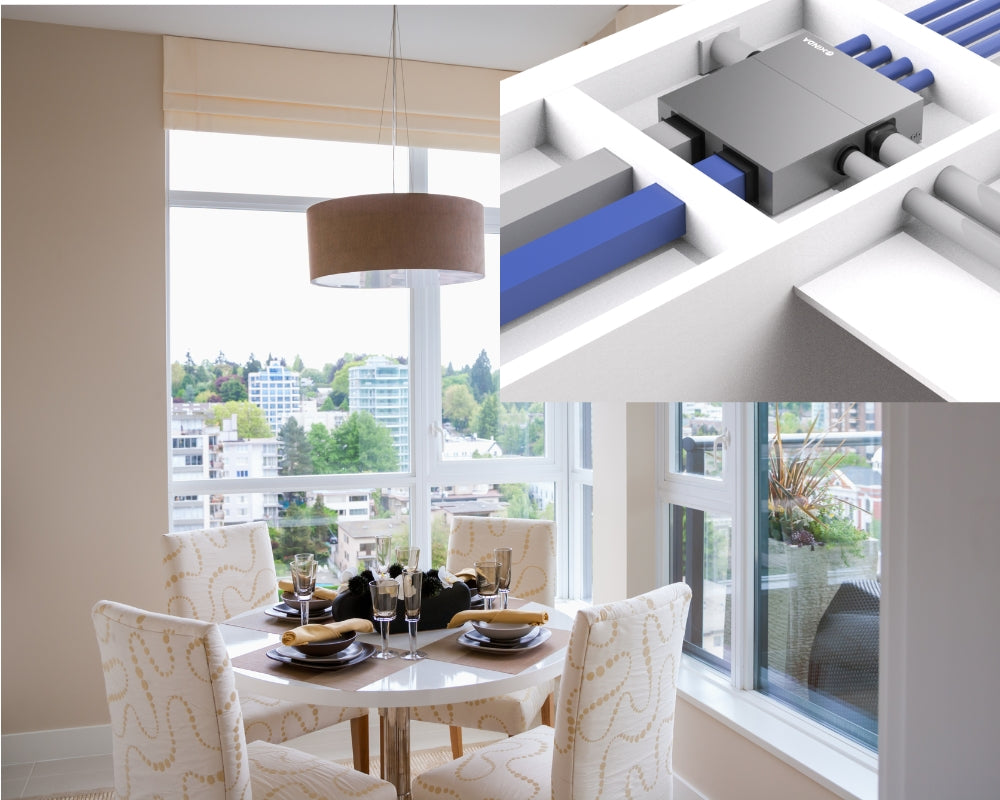
Ceiling-ducted units sit above the ceiling near the exterior wall and feed supply ducts to each room. One unit per studio or one-bedroom suite, nothing visible but diffusers, noise above the ceiling. Right for new mid- and high-rise apartments, window-wall buildings, and any project where the engineer has to show a fresh-air path. Needs ceiling depth and a service opening.
Second decision: is fresh air built in
Ventilation codes for new multifamily generally want continuous outdoor air to each suite. Units with a built-in ERV core cover that in the same box; units without one need a separate ERV, its own ducting and its own wall openings. When comparing, check whether the ERV is inside the cabinet, an add-on module, or not offered.
How the specification reads: PTHP with integrated ERV
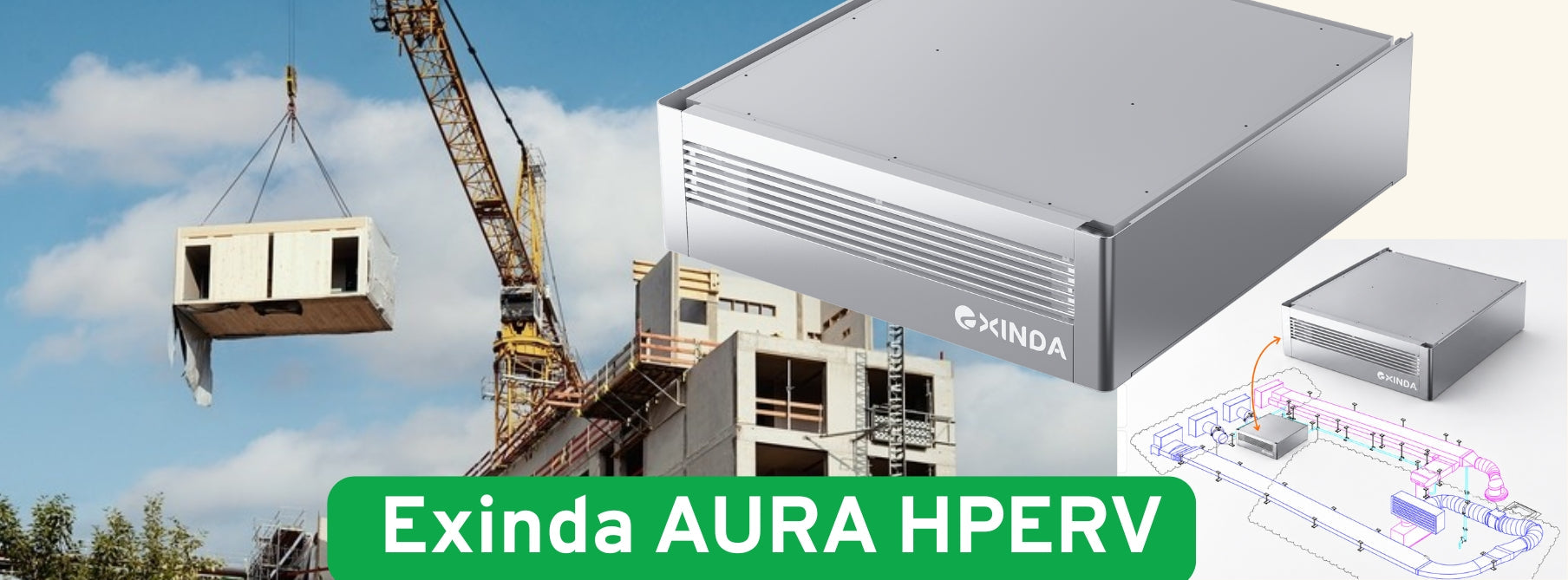
A multifamily basis of design lists this equipment under residential space conditioning as a packaged terminal heat pump (PTHP) with integrated energy recovery ventilator, and counts units per suite: one unit serves a studio; two- and three-bedroom suites take two or more, with the second unit specified as a ceiling ducted unit with ERV. The clauses that follow describe the box, not a brand: compressor, evaporator coil, ECM condenser fan, ECM supply fan and DX coil in one chassis; an ERV section that takes toilet exhaust through the core against incoming ventilation air, with MERV 13 filtration and its own ECM fans; condenser openings placed next to the ventilation and exhaust openings so the facade can keep its code separations; an access panel for the controller, electrical and filters; condensate piped to the lavatory tail piece; no rooftop equipment or refrigerant piping outside the suite; power from the suite panel. Read a specification like this clause by clause when comparing units, because the vertical stack and ceiling-ducted formats it names are different products with different openings, drains and service access. The EXINDA Aura range is organised the same way: ceiling-ducted HPERV at 12,000 Btu/h and vertical stack HPERV at 18,000 and 25,000 Btu/h, each with the ERV integrated. The full specification structure, the unit-count rule and the substitution process for a new building are in PTHP with integrated ERV for new multifamily construction.
Which projects should consider it
- New mid- and high-rise apartments where the roof and balconies are not available for condensers
- Window-wall and curtain-wall buildings that allow only small exterior penetrations
- Buildings where each suite must have its own heating, cooling and ventilation control
- Modular and prefabricated apartments, where the unit, ducts and openings are coordinated in the factory
- Small multifamily and modular single-family homes built to a passive-house standard, where one unit per dwelling carries the low load and the ventilation (see Aura HPERV for PHIUS multifamily and modular homes)
- Retrofits of buildings that have ceiling space and can accept two new wall openings per suite
Conditions to confirm before going further: a suitable exterior wall for the openings, ceiling depth or wall space for the unit, a drain route, and capacity at the winter design temperature (see the datasheet checklist below).
Where the main products sit
| Form factors | ERV | Sold through | |
|---|---|---|---|
| Innova (formerly Ephoca) | Wall-mounted, floor-standing, ceiling-suspended, ceiling-ducted, PTHP, vertical stack | Built into the ceiling-ducted and most AIO models; MERV 13; bathroom exhaust | Manufacturer's reps and its own offices/showrooms in the US and Canada |
| MagicPak | Vertical packaged closet units, heat pump or A/C, furnace options | Not built in; ventilation handled separately | HVAC distribution; 55+ years in multifamily |
| MRCOOL Monoblock | Through-wall, wall-mounted, 10,000 Btu/h cooling, 115 V plug-in | None | DIY retail and online |
| Olimpia Splendid Maestro Pro | Wall-mounted, up to 11,600 Btu/h cooling | None | Dealers |
| EXINDA Aura HPERV | Ceiling-ducted, 12,000 Btu/h cooling at 95°F / 14,000 Btu/h heating at 47°F (rated); vertical stack, 18,000 and 25,000 Btu/h | Built in; MERV 13; 6 in bathroom exhaust connection | HVAC distributors, contractors and project sales |
Innova has the widest range and the most published US project references in this category, and its ceiling-ducted unit is the closest match to the EXINDA HPERV: both are ducted, both have the ERV inside, both use MERV 13 and a BLDC twin-rotary inverter compressor. MagicPak is the incumbent for whole-apartment packaged systems where a closet is available. MRCOOL and Olimpia Splendid are single-room wall units.
Ceiling-ducted with built-in ERV: Innova HRA-I PLUS and EXINDA Aura HPERV at the same rating conditions
Both manufacturers publish rated capacities at AHRI conditions (cooling 95°F DB / 75°F WB outdoor, 80/67 indoor; heating 47/43, 17/13 and 5/3 outdoor, 70/60 indoor). Innova also publishes a "maximum" figure, which its submittal notes is for temporary operation only; the table uses rated values on both sides. Sources: Innova HRA-I PLUS Ceiling Ducted Canada submittal Rev 01; EXINDA Aura HPERV submittal, September 2026.
| EXINDA Aura HPERV (ICMPCGFF1AYE) | Innova HRA-I PLUS Ceiling Ducted | |
|---|---|---|
| Cooling, rated at 95°F | 12,000 Btu/h · EER 11.0 | 7,700 Btu/h · 13.84 SEER2 |
| Heating, rated at 47°F | 14,000 Btu/h · COP 2.43 | 8,600 Btu/h · 9.12 HSPF2 |
| Heating, rated at 17°F | 7,800 Btu/h · COP 1.86 | 8,300 Btu/h · COP2 2.02 |
| Heating, rated at 5°F | 7,165 Btu/h · COP 1.5 | 6,200 Btu/h · COP2 1.68 |
| Compressor operation below 5°F | No; 3 kW electric heater carries the load, unit runs to −31°F | Yes; rated 5,900 Btu/h at 0°F and 5,600 Btu/h at −5°F |
| Electric heat | 3 kW, staged 1 kW + 2 kW | 1.8 or 2.7 kW post heater; 1 kW pre-heater option |
| Indoor supply airflow, rated point | 430 CFM heating / 400 CFM cooling at 0.30 in. w.g. | 350 CFM nominal; see fan curves |
| Fresh air (ERV) | 42 / 90 / 135 CFM, three speeds; enthalpy core, 86% SRE at 42 CFM (HVI 2005500) | 40–80 CFM tabulated, up to ~100 CFM on the curve; counterflow enthalpy core |
| Sound at 1 m / 3 m, high | 48 / 43 dB(A), through a gypsum ceiling | 49 / 41 dB(A) |
| Refrigerant | R32, 2.17 lb | R32, 16.93 oz |
| Electrical | 208–240 V, MCA 20 A / MOP 30 A | 208/230 V, MCA 19 / MOP 20 (1.8 kW) or 28 / 30 (1 kW pre + 2.7 kW) |
| Net weight | 205 lb | 170 lb |
| Exterior openings | 12 × 8 in intake, 10 × 8 in exhaust | Two Ø8 in round |
| Controls | Wall controller; optional WiFi / BACnet | M7 wall controller; optional WiFi / Modbus |
| Listings | See product page; AHRI certification in progress | AHRI Certified (210/240); ETL Listed |
Read it as it is. The HPERV is the larger unit at 95°F and 47°F and moves more fresh air; the Innova unit holds more of its capacity at 17°F, keeps the compressor running below 5°F, and carries AHRI and ETL listings today. On static pressure, Innova publishes a maximum of 0.6 in. w.g. without the airflow at that point, while the HPERV publishes its fan curve (430 CFM at 0.30 in. w.g., 320 CFM at 0.5 in. w.g.); compare airflow at the static your duct run actually produces, not the maximum figure. Cold-climate projects and projects that require AHRI-certified ratings should weigh the Innova column; milder climates, higher supply-duct resistance and higher fresh-air requirements favour the HPERV.
What to check on any datasheet
- Capacity at three outdoor temperatures, not one. Ask for 47°F, 17°F and 5°F heating and 95°F cooling with the indoor conditions printed next to them.
- Which operating level the number is. Some manufacturers publish maximum, recommended and nominal figures. Compare like with like.
- The fan curve. For ducted units, airflow at the static pressure your duct run actually produces, not the free-air number.
- Backup heat. Every unit in this category drops off hard below 17°F; check the electric heater size and when it stages in.
- ERV data on its own. Recovery efficiency at a stated airflow and inlet temperature, and which standard it was tested to.
- Listings. A safety listing (CSA, ETL or UL) on the unit; AHRI reference number if the project requires certified ratings.
EXINDA Aura HPERV: the rated data
Model ICMPCGFF1AYE. From the September 2026 submittal, at AHRI/ASHRAE rating conditions.
| Outdoor condition | Capacity | Input | Efficiency | |
|---|---|---|---|---|
| Cooling | 95°F DB / 75°F WB (indoor 80/67) | 12,000 Btu/h | 1,090 W | EER 11.0 |
| Heating | 47°F DB / 43°F WB (indoor 70/60) | 14,000 Btu/h | 1,687 W | COP 2.43 |
| Heating | 17°F DB / 13°F WB | 7,800 Btu/h | 1,230 W | COP 1.86 |
| Heating | 5°F DB / 3°F WB | 7,165 Btu/h | 1,400 W | COP 1.5 |
Compressor runs down to 5°F, then the 3 kW electric heater takes over (1 kW stage from 41°F, 2 kW from 23°F). With ERV recovery: 16,500 Btu/h heating at 47°F, 13,500 Btu/h cooling at 95°F.
Indoor supply 430 CFM heating / 400 CFM cooling at 0.30 in. w.g.; outdoor intake and exhaust 650 CFM at 0.36 in. w.g.; fresh air 42–135 CFM in three speeds with 86% sensible recovery at 42 CFM. 208–240 V / 60 Hz hardwired, R32, 48 dB(A) at 1 m through a gypsum ceiling, 46 × 45-11/16 × 11-1/8 in, 205 lb. Two exterior openings, 12 × 8 in intake and 10 × 8 in exhaust.
Listings and test-report references, full fan curves, duct sizing and clearances are on the HPERV product page. For the wall-mounted versus ducted decision in more detail, see Ceiling-ducted vs wall-mounted all-in-one heat pumps.
Information needed for a project selection
- Project location and design temperatures
- Building and apartment type, floor plans
- Room-by-room heating and cooling loads
- Required ventilation airflow
- Proposed duct layout and estimated external pressure loss
- Available ceiling space, outdoor intake and exhaust locations
- Electrical supply, project quantity, required certifications
- Reference model, if the project already has one specified
Frequently asked questions
Is a ceiling-ducted heat pump with built-in ERV a PTHP?
In specifications, yes. Engineers write PTHP (or SPHP) for any single-package heat pump that sits in the suite and breathes through the exterior wall, then add "with integrated ERV" and "ceiling ducted" to define the version. For certified ratings the programs differ: the through-the-wall sleeve format is rated under the AHRI PTAC/PTHP program, while a ducted unit is rated as a heat pump under a different program, so ask each manufacturer for the rating reference the project actually requires.
Is Ephoca the same company as Innova?
Yes. Ephoca was Innova's US name from 2021 to 2026 during a trademark case with Innovair. It is now Innova again.
Which all-in-one heat pumps have the ERV built in?
Innova's range (including the ceiling-ducted model) and the EXINDA Aura HPERV. MagicPak, MRCOOL and Olimpia Splendid wall units do not include energy recovery.
Can EXINDA propose an alternative for a project that already has a specified unit?
Yes, as a project alternative for evaluation, not a drop-in swap. Send the suite plan, project location and design requirements; a reference model is helpful but not required. You get back a recommended configuration, performance at the same rating conditions, installation requirements and anything that would need to change on site.
What certifications should I check?
A safety listing on the unit (CSA, ETL or UL). For anything with an ERV, ventilation testing to CAN/CSA-C439 or HVI. If the project needs AHRI-certified ratings, ask for the AHRI reference number rather than assuming it.
Next step
Have a project? Send suite count, project location, design requirements and a typical unit plan to info@exindagroup.com or through the contact page and ask for project selection support. EXINDA returns a recommended configuration, performance at the same rating conditions, duct and clearance requirements and the submittal.
Distributor or rep? Ask for the HPERV product information pack: submittal, installation drawings, certification documents, and the terms for a sample unit evaluation and training.