Quick Answer
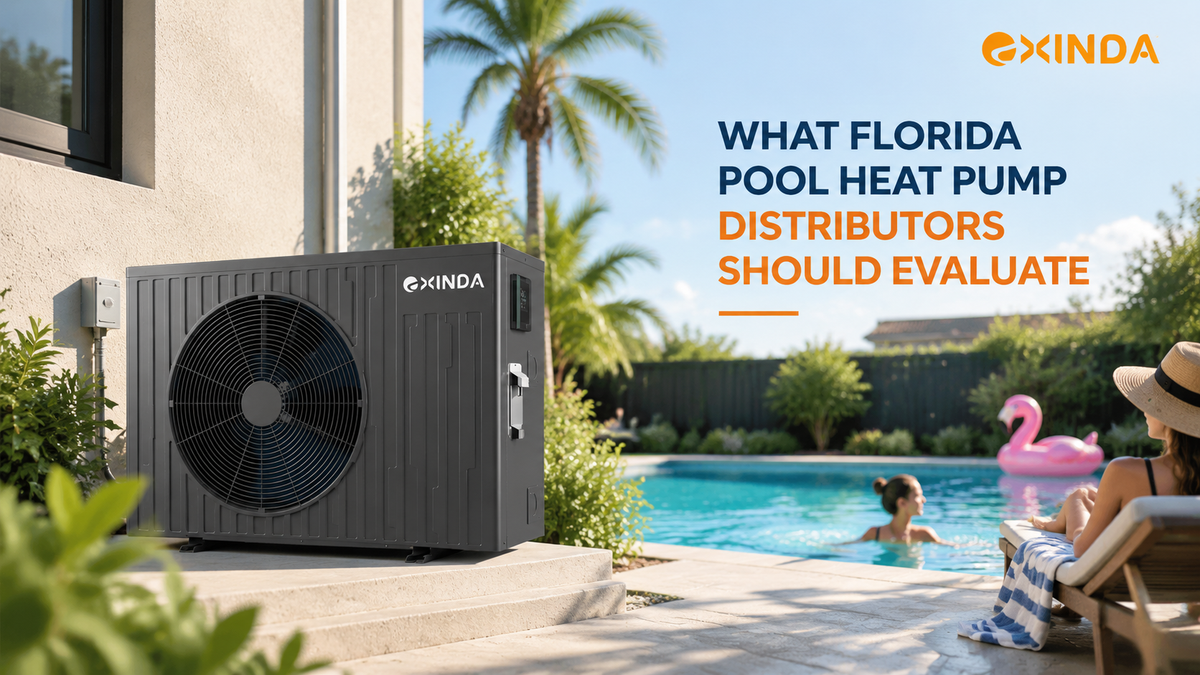
This guide is for Florida pool heat pump distributors, dealers, contractors and project buyers evaluating a new product line. A suitable supplier should provide a clear capacity range, model-specific technical data, installation guidance, service procedures and written warranty terms. Selection should account for pool volume, desired water temperature, recovery time, ambient conditions, wind exposure, use of a cover, saltwater operation and site airflow.
Why Florida Requires a Specific Evaluation
Florida offers a long swimming season, but its pool projects are exposed to high humidity, intense sun, long operating hours and, in coastal areas, salt-laden air. Residential pools, vacation rentals, community pools and hospitality projects also have different recovery-time and service expectations. Published BTU capacity alone is therefore not enough to select or compare equipment.
1. Confirm the Product Range and Application
A distributor should first confirm which models are intended for North American electrical conditions and which capacities match the local project mix. EXINDA’s North American R32 pool heat pump range includes nominal 65,000, 96,000, 121,000 and 150,000 BTU/h models. Final selection must use model-specific performance tables and the actual design conditions.
Do not size from pool volume alone. Review:
- Pool surface area and volume
- Target and starting water temperatures
- Required heat-up or recovery time
- Lowest expected operating ambient temperature
- Wind exposure, shade and evaporation
- Pool-cover use
- Residential or commercial duty cycle
2. Check Florida Installation Conditions
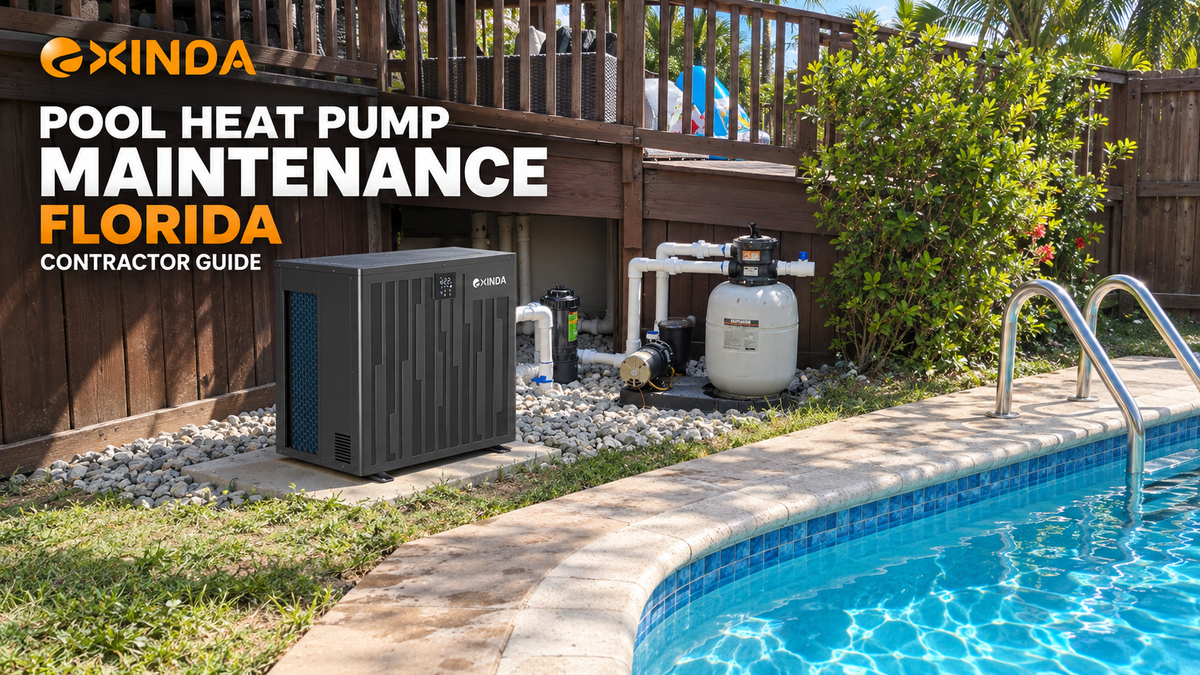
Heat pumps need unobstructed airflow and adequate service clearance. Tight walls, landscaping, fencing or roof overhangs can cause recirculation and reduce performance. Drainage must also be planned because normal condensation can be substantial in humid weather.
For saltwater pools, confirm that the water circuit uses a suitable corrosion-resistant heat exchanger and that installation, water chemistry and bonding follow the applicable manual and local requirements. Coastal exposure also makes cabinet, fastener and coil protection important review points.
3. Compare Verified Performance, Not Headlines
Ask for capacity and efficiency at clearly stated air and water temperatures. A single maximum COP or nominal BTU value cannot represent all operating conditions. The supplier should provide model-specific documentation showing test conditions, airflow requirements, electrical data, water-flow range, pressure drop, sound data and operating limits.
4. Review Certification by Model and Market
Certification statements should identify the exact model and intended market. Do not assume that a certificate covering one product family, voltage or refrigerant automatically applies to every unit. Request the applicable listing or report before using certification claims in quotations, submittals or advertising.
5. Evaluate Warranty and Service Support
A practical warranty process should define covered parts, exclusions, diagnostic responsibility, required evidence, claim approval, replacement-part supply and freight or labor responsibility. Dealers should also confirm access to wiring diagrams, fault-code guidance, exploded views, parts lists and technical support.
6. Questions Florida Distributors Should Ask
- Which models are configured for the United States and Florida projects?
- What are the capacity and COP at the relevant rating conditions?
- Which exact models hold the stated certifications?
- What water-flow range and installation clearances are required?
- What materials protect the heat exchanger, cabinet and fasteners?
- How are warranty claims diagnosed and approved?
- Which spare parts are stocked and what is the normal response process?
- Can the supplier support selection, documentation and project submittals?
EXINDA Support for Florida Partners
EXINDA supports distributors and contractors with model selection, model-specific technical data, installation documentation, control information and after-sales coordination. For a project review, provide the pool dimensions, location, desired water temperature, heat-up requirement, electrical supply, pool-cover use and site layout.
View EXINDA pool heat pump solutions or contact EXINDA for model selection support.