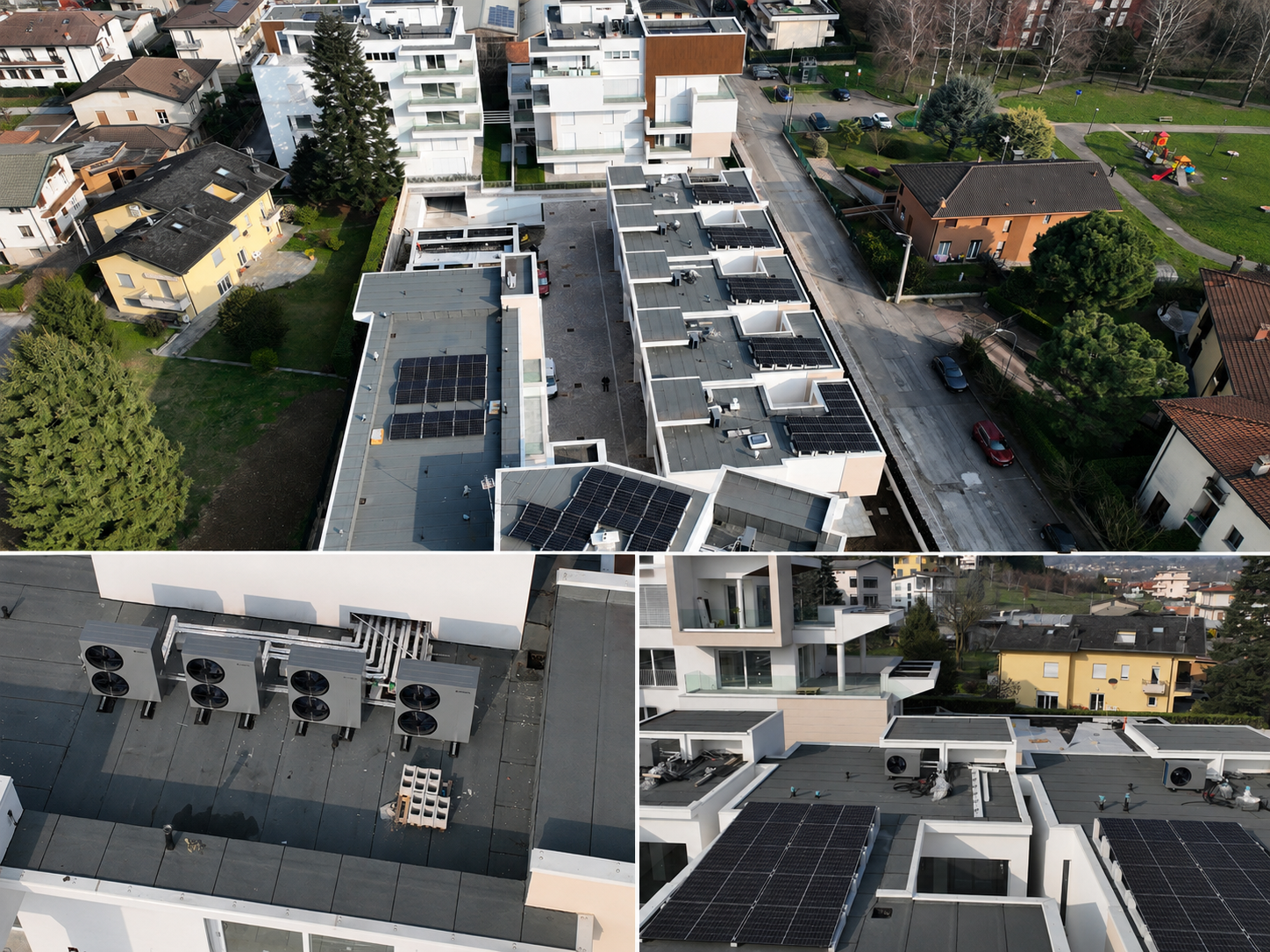
1. Case Study Overview
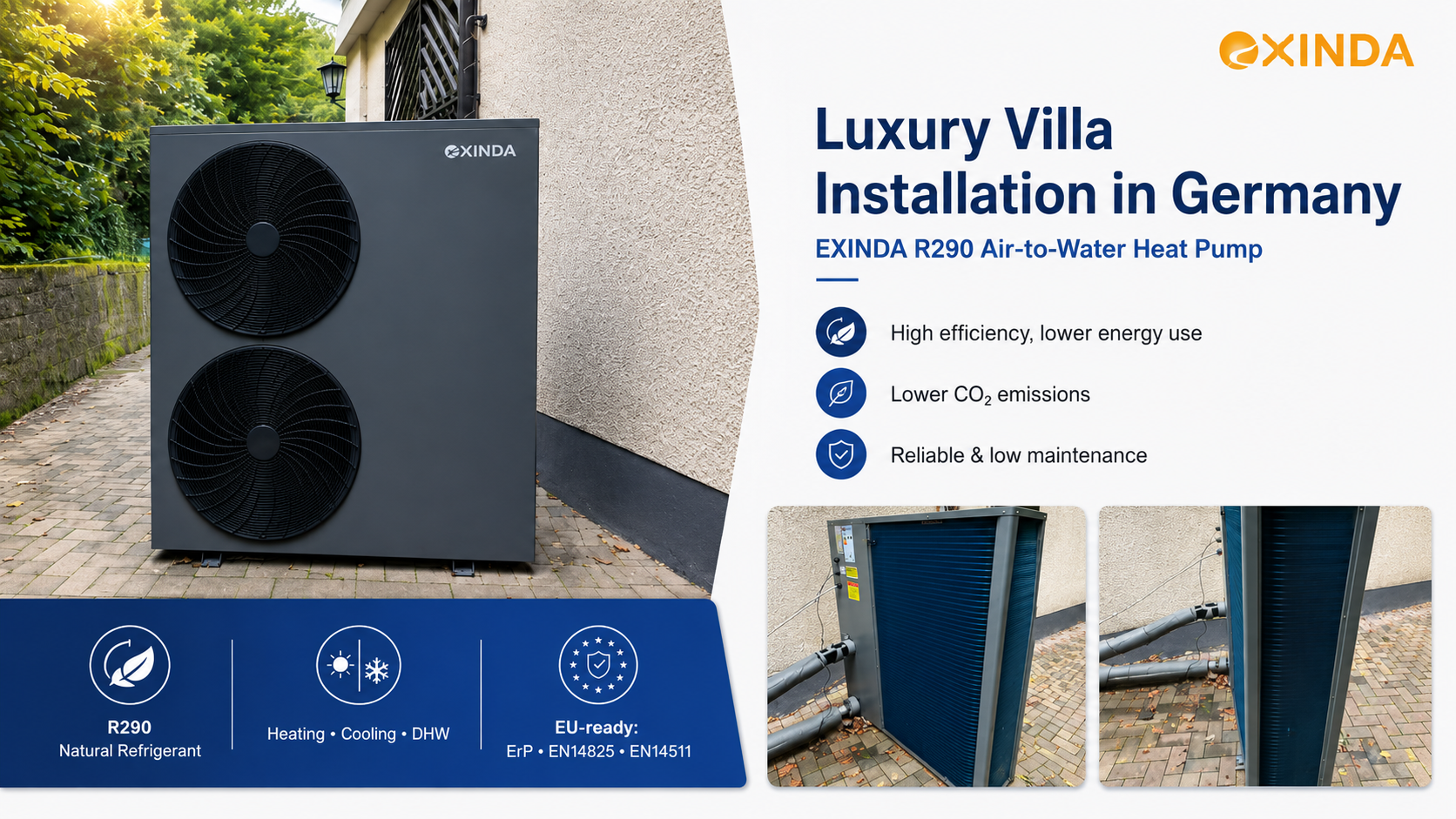
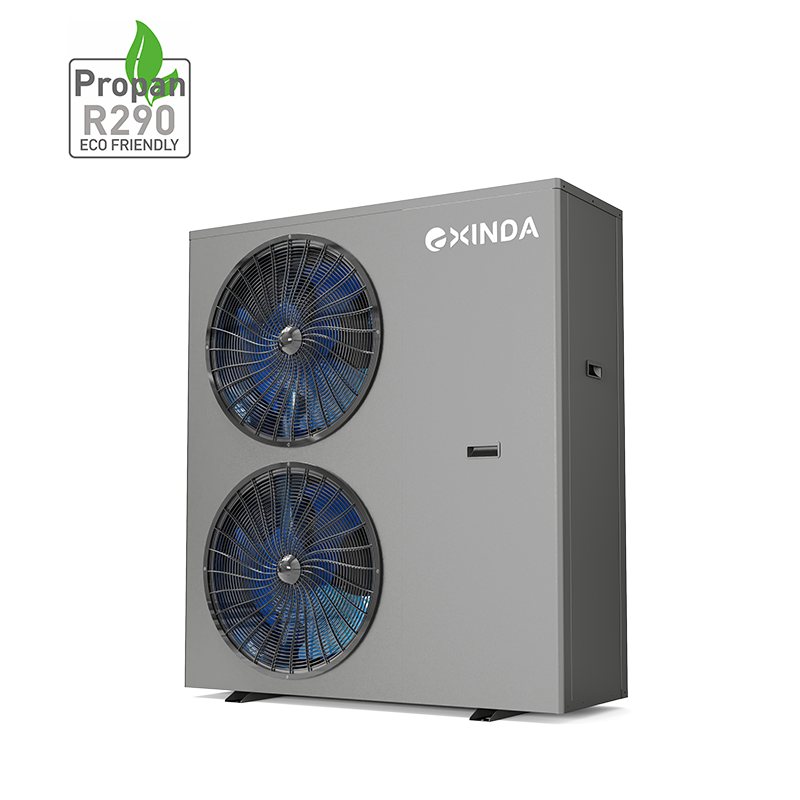
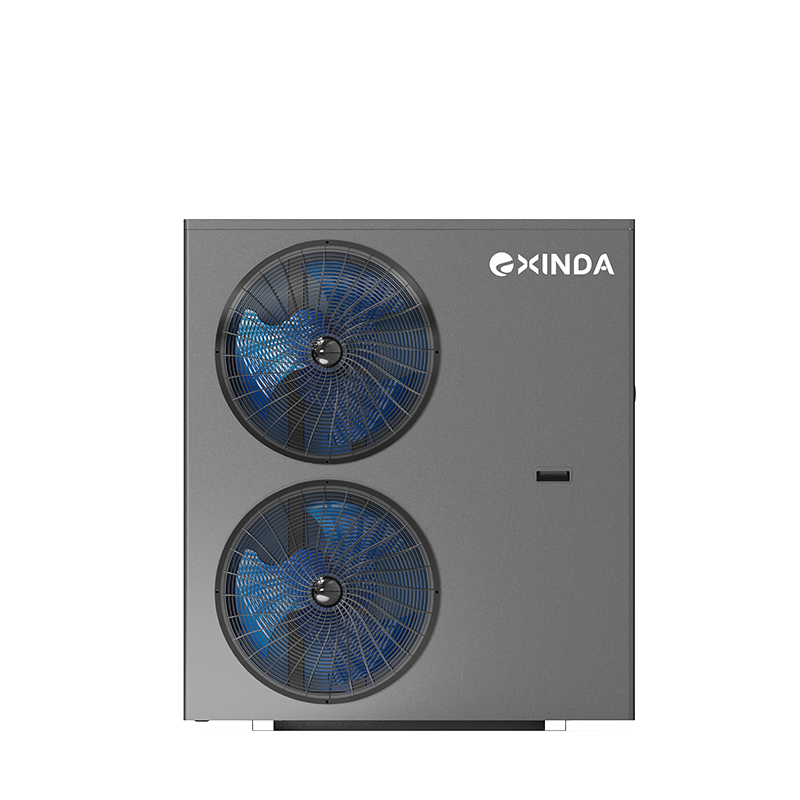
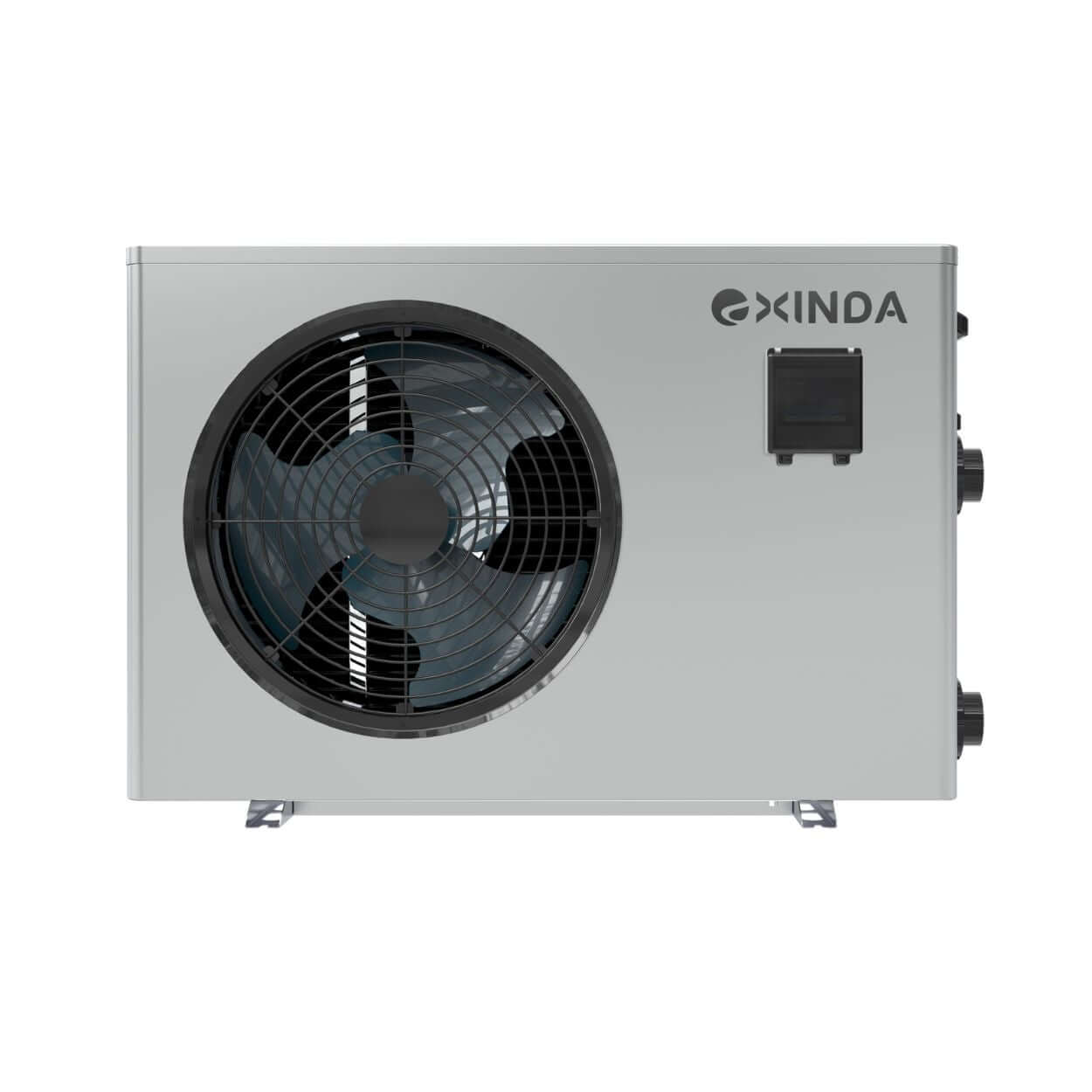
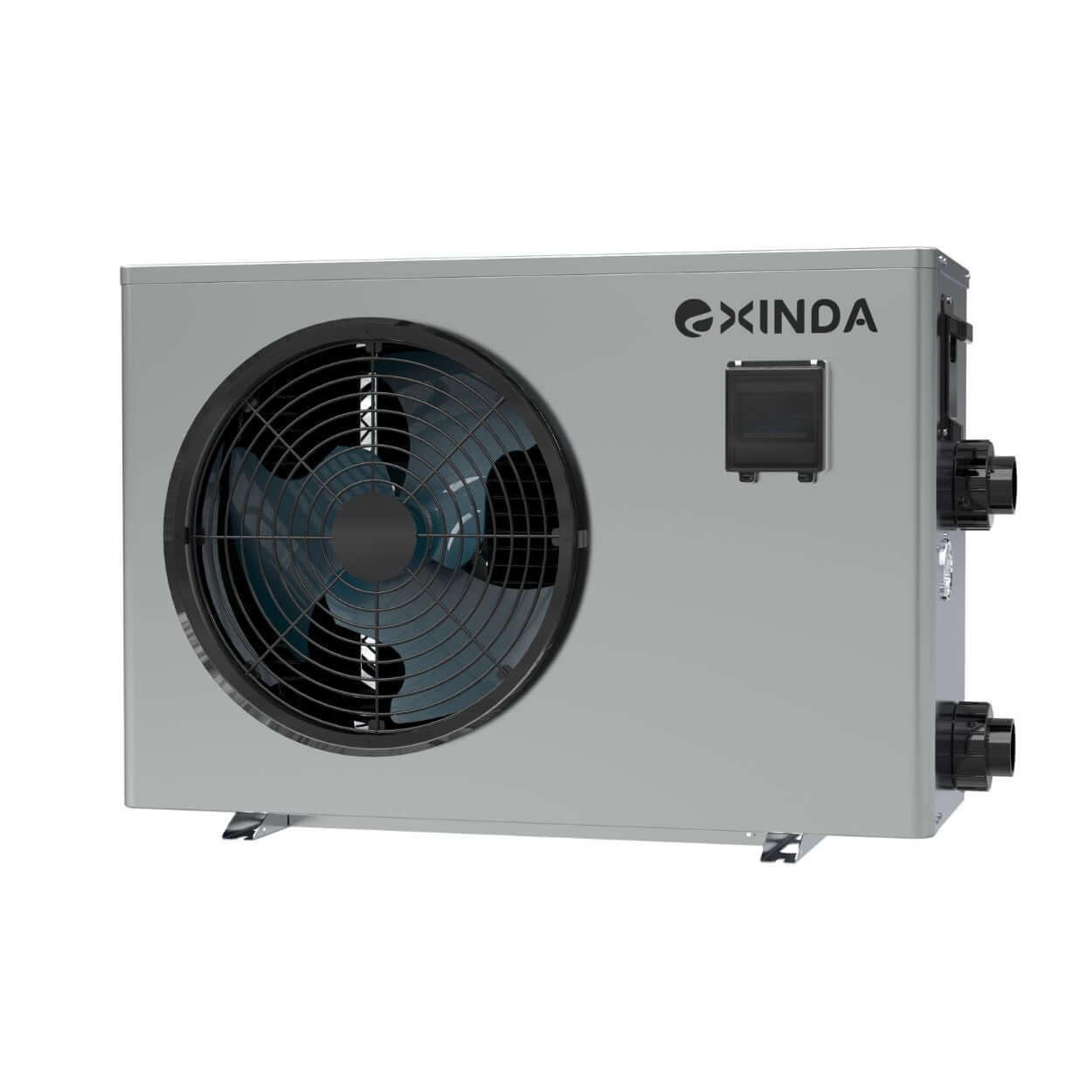
Exinda R290 Heat Pump were installed in a newly constructed multi-family residential building in Italy. These Exinda R290 Heat Pumps are designed to provide integrated space heating, cooling, and domestic hot water (DHW) using Exinda R290 Heat Pump technology.
This project represents a typical European electrification scenario where hydronic heat pump systems are replacing traditional fossil fuel-based heating solutions in residential buildings.
2. Project Background
The project was developed for a new high-end residential complex requiring a fully electric and efficient building energy system.
- Building type: High-end multi-family residential building
- Total building area: 1,500 m²
- Location: Italy
- Application: Residential heating, cooling, and domestic hot water supply
- System architecture: Hybrid hydronic system (centralized + decentralized design)
Key requirements include:
- Elimination of fossil fuel-based heating systems
- Compliance with EU energy efficiency and carbon reduction targets
- Integrated heating, cooling, and DHW functionality
- Independent temperature control across multiple residential units
The project reflects the increasing adoption of heat pump systems in European residential developments driven by decarbonization policies and building energy regulations.

3. System Configuration
The installed system consists of 9 Exinda R290 Heat Pump units configured as a hybrid system:
| System Segment | Equipment | Quantity | Configuration Type | Function |
|---|---|---|---|---|
| Centralized System | EXINDA R290 20kW Heat Pump | 4 units | Cascade configuration | Shared heating, cooling, and domestic hot water (DHW) supply |
| Decentralized System | EXINDA R290 6kW Heat Pump | 5 units | Independent unit-level systems | Localized heating, cooling, and DHW per residential unit |
| System Functions | — | — | Integrated hydronic system | Space heating, space cooling, domestic hot water production |
These Exinda R290 Heat Pump is fully designed to comply with core European HVAC regulations:
- ErP Directive (energy labeling framework for heating systems)
- EN14825 (seasonal efficiency calculation standard)
- EN14511 (performance testing conditions)
- F-Gas Regulation (phase-down of high-GWP refrigerants)
This ensures the system can be used in subsidy-supported renovation projects across Italy and the EU.
4. Installation Design Logic
The system is designed according to European hydronic heat pump engineering principles:
- Cascade operation improves system redundancy and load modulation
- Hybrid centralized and decentralized architecture improves flexibility
- Hydronic loop integration ensures stable thermal distribution
- Weather-compensated control improves seasonal efficiency
- Hydraulic balancing ensures stable multi-zone operation
This design enables stable operation across varying residential load conditions while maintaining high system efficiency.
5. System Performance Considerations
System performance depends on real building operating conditions, including:
- Load distribution between centralized and decentralized systems
- Hydronic flow stability across multiple circuits
- Seasonal temperature variation in Mediterranean climate
- Domestic hot water consumption patterns
- Building insulation and thermal characteristics
Actual system efficiency is determined by integration quality rather than individual unit performance.
6. Application Scenario
This project represents a typical European new-build multi-family residential application.
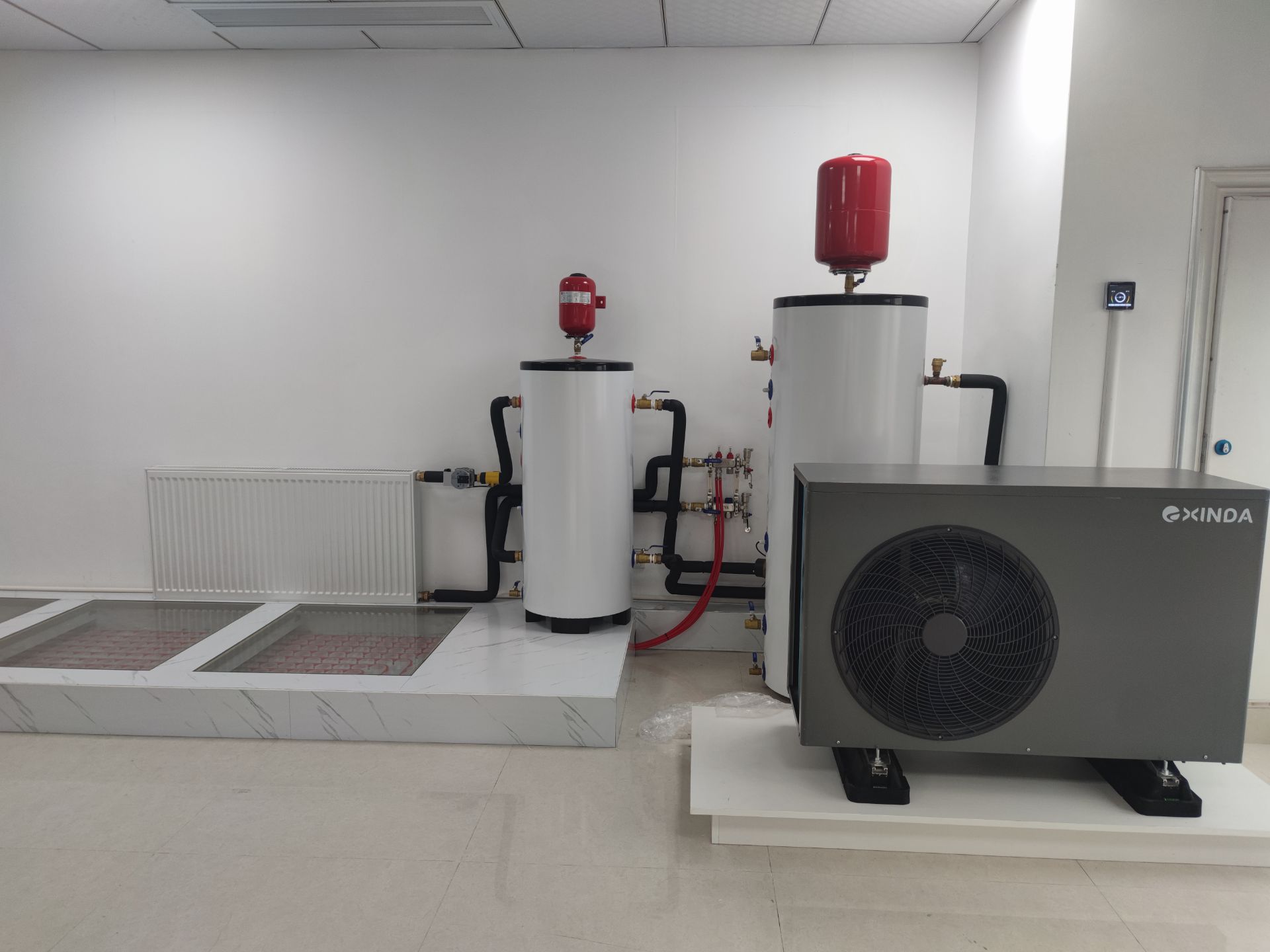
System integration includes:
- Centralized cascade heat pump system for shared building load
- Independent heat pump units for residential units
- Radiator or underfloor heating systems
- Domestic hot water supply via integrated tanks
- Weather compensation control for seasonal optimization
This hybrid architecture allows both centralized efficiency and decentralized control flexibility.
7. Key Engineering Notes
| Engineering Topic | Technical Insight | Impact on System Performance |
|---|---|---|
| Cascade system design | Multiple heat pumps operate in staged or parallel cascade configuration | Improves redundancy, load modulation, and system reliability |
| Hybrid architecture | Combination of centralized and decentralized heat pump systems | Enables flexible energy distribution across building zones |
| Hydraulic balancing | Proper balancing of water flow in multi-circuit hydronic systems | Ensures stable temperature control and prevents uneven heating |
| System commissioning | On-site tuning and parameter optimization after installation | Critical for long-term stable operation and efficiency performance |
| R290 safety compliance | Installation follows European safety standards for A3 refrigerant systems | / |
8. FAQ
Q1: Can R290 heat pumps be used in multi-family residential buildings?
Yes, R290 heat pump systems are widely used in European multi-family residential applications for heating, cooling, and domestic hot water.
Q2: Why use both centralized and decentralized systems?
This hybrid approach allows flexible load distribution, redundancy, and independent control for different residential units.
Q3: Is R290 suitable for new construction projects?
Yes, R290 is widely used in new European residential developments due to its low environmental impact and regulatory compliance.
Q4: What determines real system efficiency?
System-level design, hydronic integration, and commissioning quality have greater impact than individual equipment efficiency.
9. Contact
EXINDA R290 heat pump are designed for hydronic heating networks, including radiator and underfloor heating systems, and are widely applied in both new residential developments and building retrofit projects across European climate conditions.
For European project consultation, distributor inquiry, or technical support Website: https://exindagroup.com/
Email: info@exindagroup.com
10. Summary
Exinda R290 heat pump complies with EU requirements including CE certification, ErP Directive, Keymark certification, EN14511, EN14825, and F-Gas Regulation standards. It is widely used in new residential developments in Italy and across Europe, supporting low-carbon electrification, high seasonal efficiency, and safe R290 refrigerant application in modern building energy systems.