Decentralized ERV in Canada—A Cold-Climate Ventilation Solution for Hotel Guest Rooms
Extended stay hotels in Canada are designed for longer guest occupancy and often include apartment-style features such as larger rooms, kitchenettes, and living areas. These buildings require reliable ventilation solutions that provide fresh air, maintain indoor comfort, and reduce energy losses during cold winter conditions.
For many extended stay hotel projects, decentralized ERV (Energy Recovery Ventilation) systems provide a practical room-by-room ventilation solution.
Unlike centralized ventilation systems that serve multiple rooms through large duct networks, decentralized ERV systems install individual ventilation units close to each guest room.
What Is a Decentralized ERV System?
A decentralized ERV system is an energy recovery ventilation solution where each occupied space has its own dedicated ventilation unit.
| Ventilation Type | System Design | Typical Application |
|---|---|---|
| Centralized ERV | One large ERV/AHU supplies multiple rooms through ductwork | Large hotels, commercial buildings |
| Decentralized ERV | Individual ERV units installed for each room or zone | Extended stay hotels, boutique hotels, multi-family buildings |
For Canadian extended stay hotels, decentralized ERV can reduce ductwork complexity and provide independent ventilation control for each guest room.
Why Extended Stay Hotels in Canada Use Decentralized ERV
Extended stay hotels have similar characteristics to multi-family residential buildings:
| Building Characteristic | Ventilation Requirement |
|---|---|
| Longer guest occupancy | Continuous fresh air supply |
| Individual guest rooms | Independent ventilation control |
| Residential-style layouts | Quiet and comfortable operation |
| Cold Canadian winters | Energy recovery and frost protection |
A room-by-room ERV approach helps contractors avoid complex duct systems while providing dedicated ventilation for each room.
Canadian Cold Climate Ventilation Challenges
Canada’s winter climate creates higher requirements for ventilation equipment.
Outdoor temperatures in many regions can reach:
- Alberta: approximately −22°F (−30°C)
- Northern Canada: below −13°F (−25°C)
Without energy recovery, introducing cold outdoor air directly into hotel rooms increases heating demand.
An ERV system transfers energy between:
Warm indoor exhaust air → ERV core → Cold outdoor fresh air
This helps reduce ventilation-related heating loads and improves indoor comfort.
Key Selection Criteria for Hotel Guest Room ERV
Contractors, engineers, and developers usually focus on the following factors:
| Selection Factor | Why It Matters |
|---|---|
| Airflow capacity | Must match guest room ventilation requirements |
| External static pressure | Ensures airflow performance after duct connection |
| Low noise operation | Important for guest sleeping comfort |
| Cold climate performance | Required for Canadian winter operation |
| Compact size | Allows ceiling or limited-space installation |
| Easy maintenance | Reduces service time for hotel operators |
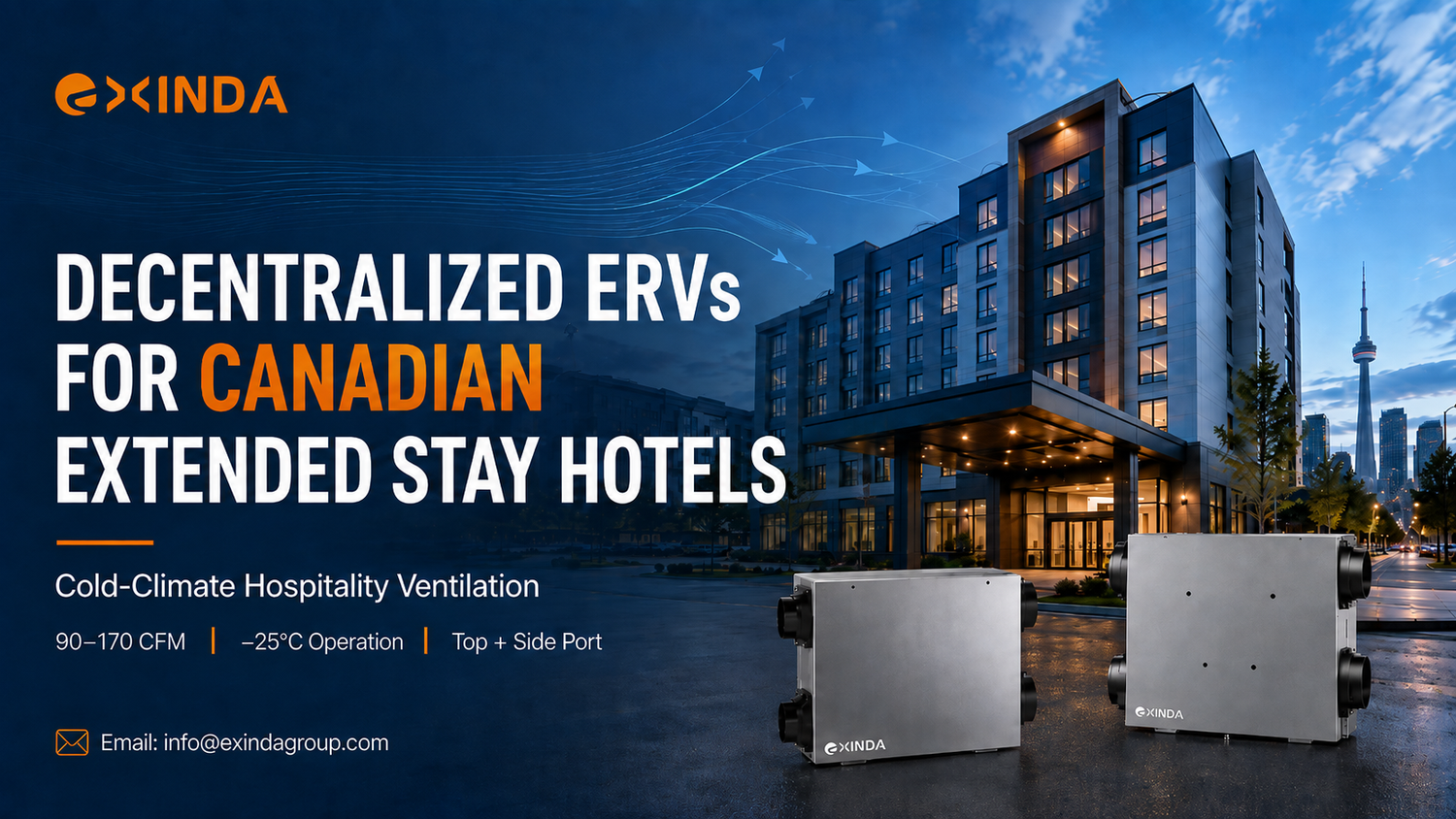
For many individual hotel rooms, compact ERV systems in the range of approximately 100–150 CFM are commonly considered depending on room size and ventilation requirements.
Performance and Certification Requirements
Canadian hospitality projects require reliable technical documentation for product selection.
| Required Information | Purpose |
|---|---|
| Airflow performance data | Verify ventilation capacity |
| Energy recovery efficiency | Compare energy performance |
| Sound data | Evaluate guest comfort |
| Electrical certification | Support project approval |
| Installation documentation | Assist contractors |
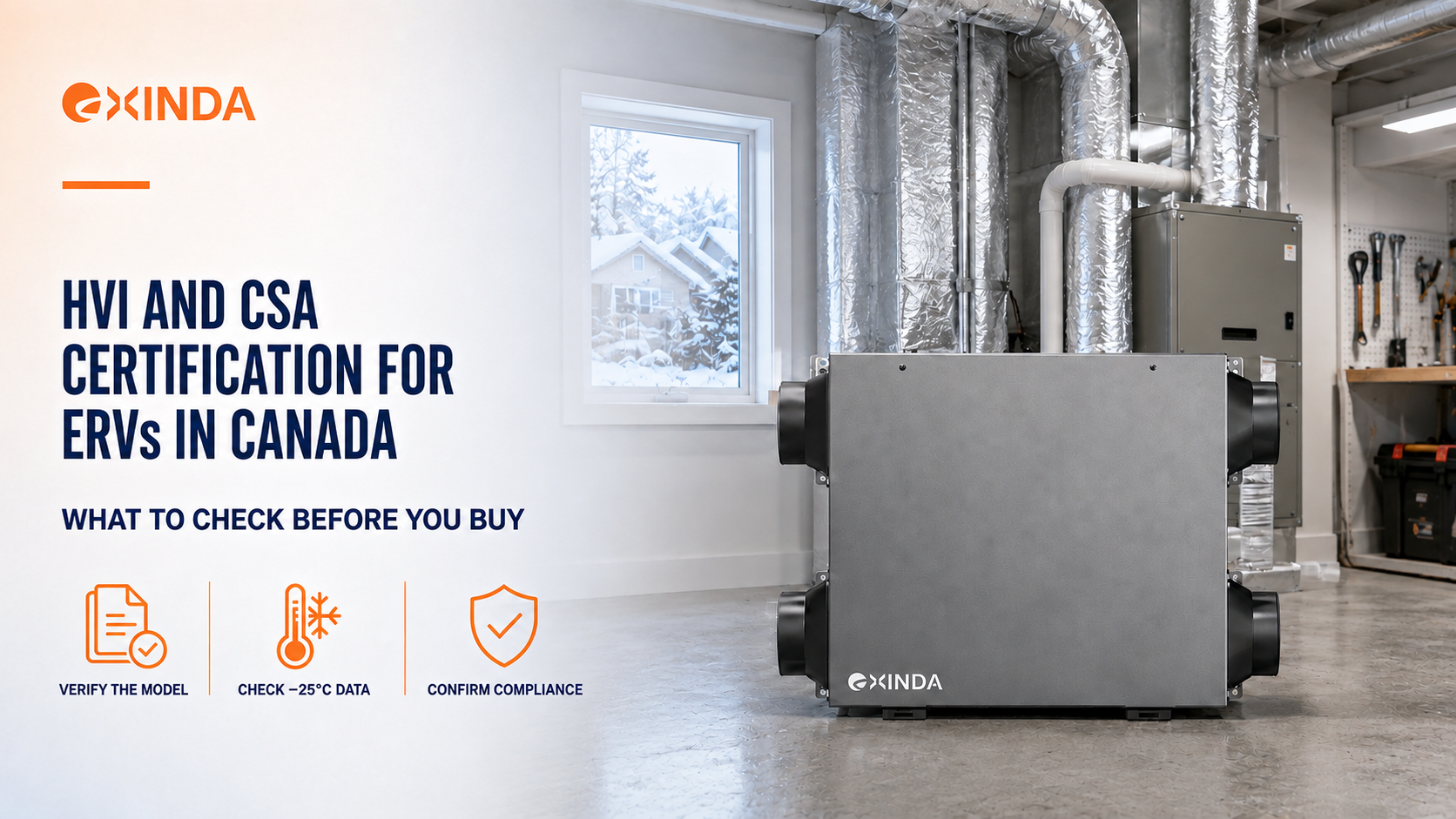
HVI-listed ERV performance data provides standardized information for evaluating airflow and energy recovery performance.
EXINDA Decentralized ERV Solution for Canadian Hospitality Projects
EXINDA provides compact ERV systems designed for cold-climate ventilation applications, including:
- Extended stay hotels
- Hotel guest rooms
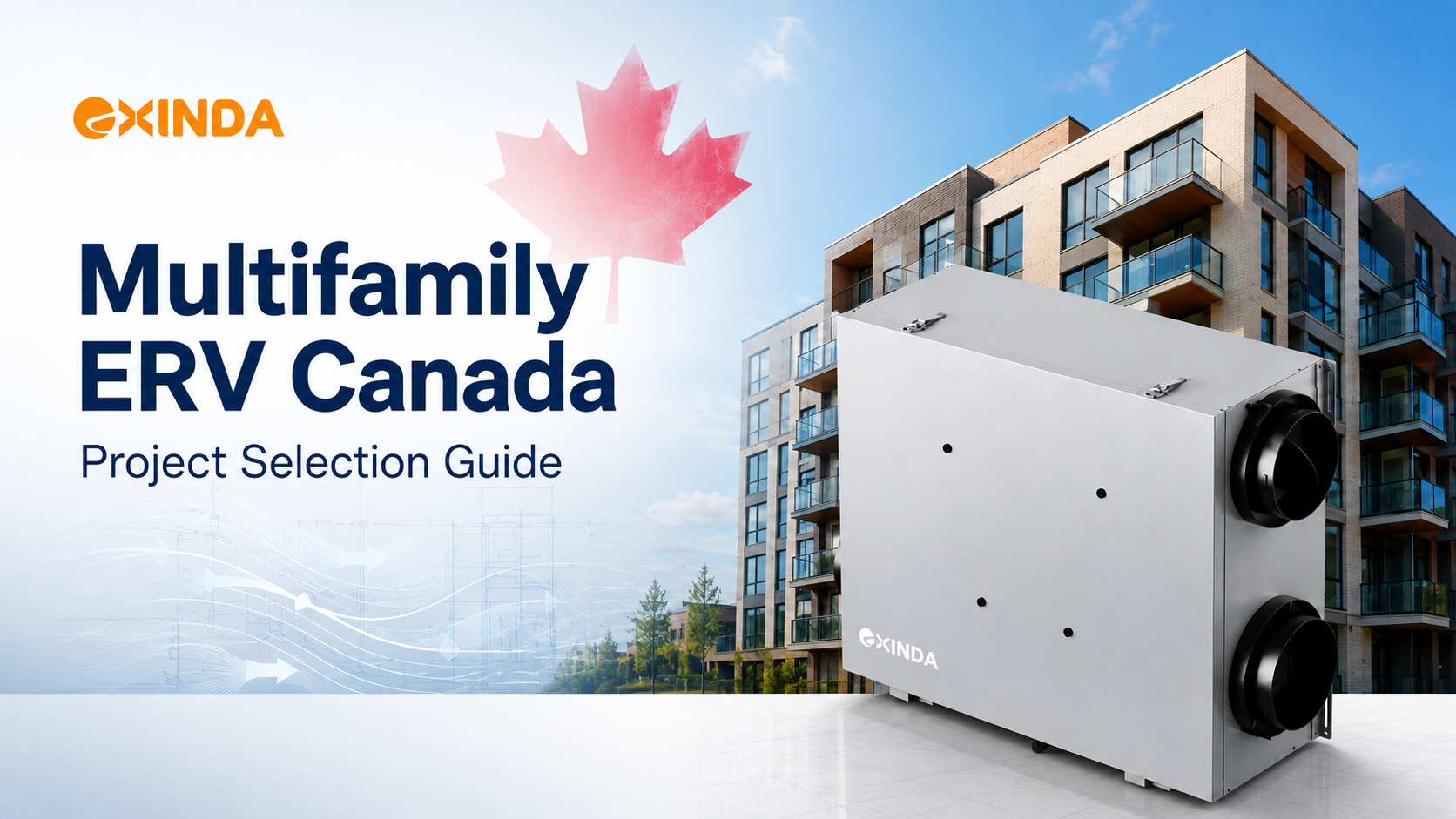
- Multi-family residential buildings
- Hospitality renovation projects
EXINDA decentralized ERV solutions are designed with:
| Application Requirement | EXINDA Solution |
|---|---|
| Individual room ventilation | Compact room-level ERV design |
| Canadian cold climate | Low-temperature operation capability |
| Contractor installation | Top-port and side-port configurations |
| Project evaluation | HVI and technical performance documentation |
With compact airflow options suitable for room-level ventilation applications, EXINDA ERV systems support developers, contractors, and engineers working on Canadian hospitality projects.
FAQ: Decentralized ERV for Canadian Extended Stay Hotels
What is a decentralized ERV for hotels?
A decentralized ERV is an individual energy recovery ventilation unit installed for each guest room or small occupied zone instead of using one centralized ventilation system.
Why are decentralized ERV systems suitable for extended stay hotels?
Extended stay hotels operate similarly to residential buildings, where each room requires independent ventilation, comfort control, and energy-efficient operation.
What airflow ERV is suitable for hotel guest rooms?
The required airflow depends on room size and occupancy. Compact ERV systems around 100–150 CFM are commonly considered for individual guest room applications.
Why is cold climate performance important in Canada?
Canadian winters require ERV systems that can maintain reliable ventilation performance while recovering energy from exhaust air.
Conclusion
Decentralized ERV systems are becoming a practical ventilation approach for Canadian extended stay hotels because they provide:
- Independent guest room ventilation
- Reduced ductwork complexity
- Energy recovery during cold weather
- Flexible installation for new construction and renovation projects
EXINDA develops compact HVI-listed ERV solutions for Canadian residential, multi-family, and hospitality ventilation applications.
Contact EXINDA:
Website:www.exindagroup.com
Email:info@exindagroup.com