How to Cool a Metal Fabrication Workshop Efficiently
Metal fabrication workshop cooling is a major challenge for industrial facilities where welding equipment, cutting machines, and continuous production processes generate significant heat. Maintaining comfortable working conditions requires effective cooling solutions that can handle large spaces, high internal heat loads, and varying outdoor temperatures.
For factory owners and facility managers, excessive workshop temperatures are more than a comfort issue. Heat can affect employee productivity, increase cooling costs, and create additional challenges for temperature-sensitive manufacturing operations.
Choosing the right cooling system requires an understanding of the workshop's heat sources, ventilation conditions, building layout, and local climate.
This guide explores practical metal fabrication workshop cooling solutions, compares different cooling technologies, and explains how hybrid evaporative cooling with DX refrigeration can support industrial temperature management.
1. Why Do Metal Fabrication Workshops Get So Hot?
Metal fabrication facilities experience heat from multiple sources, making temperature management particularly challenging in large production environments.
Heat Generated by Manufacturing Equipment
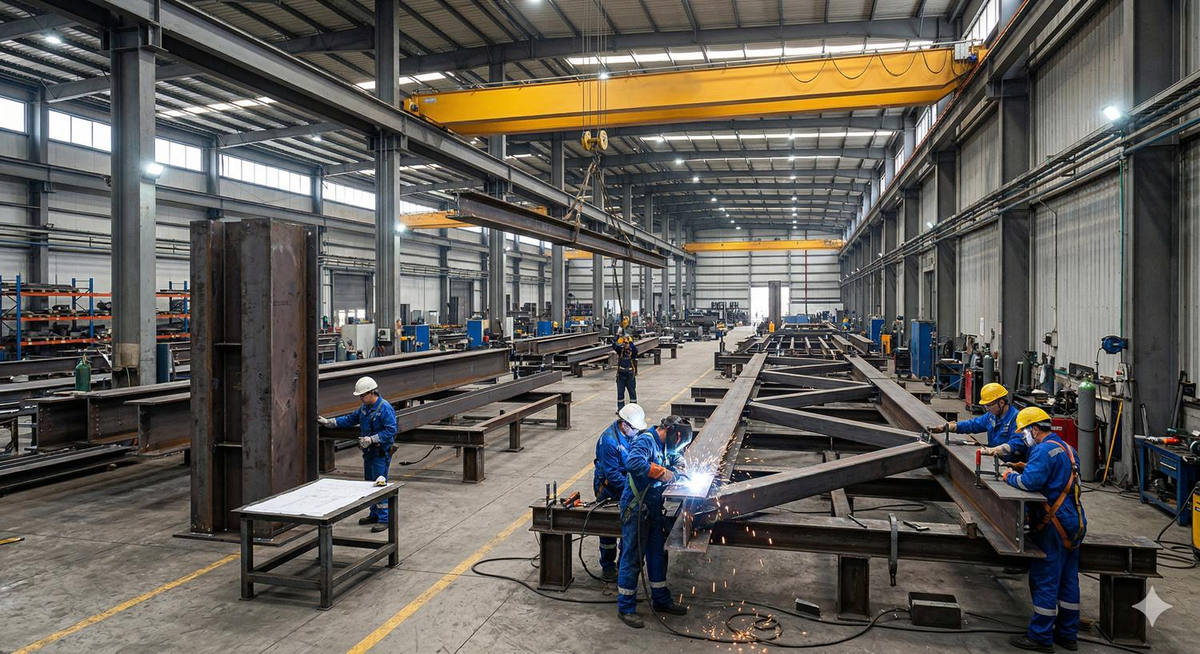
Welding stations, laser cutting machines, plasma cutters, and other metalworking equipment release heat during operation.
When multiple machines operate simultaneously, the accumulated heat load can significantly increase indoor temperatures.
The combination of process heat and radiant heat from hot metal surfaces can also create uncomfortable conditions around individual workstations.
Large Industrial Building Structures
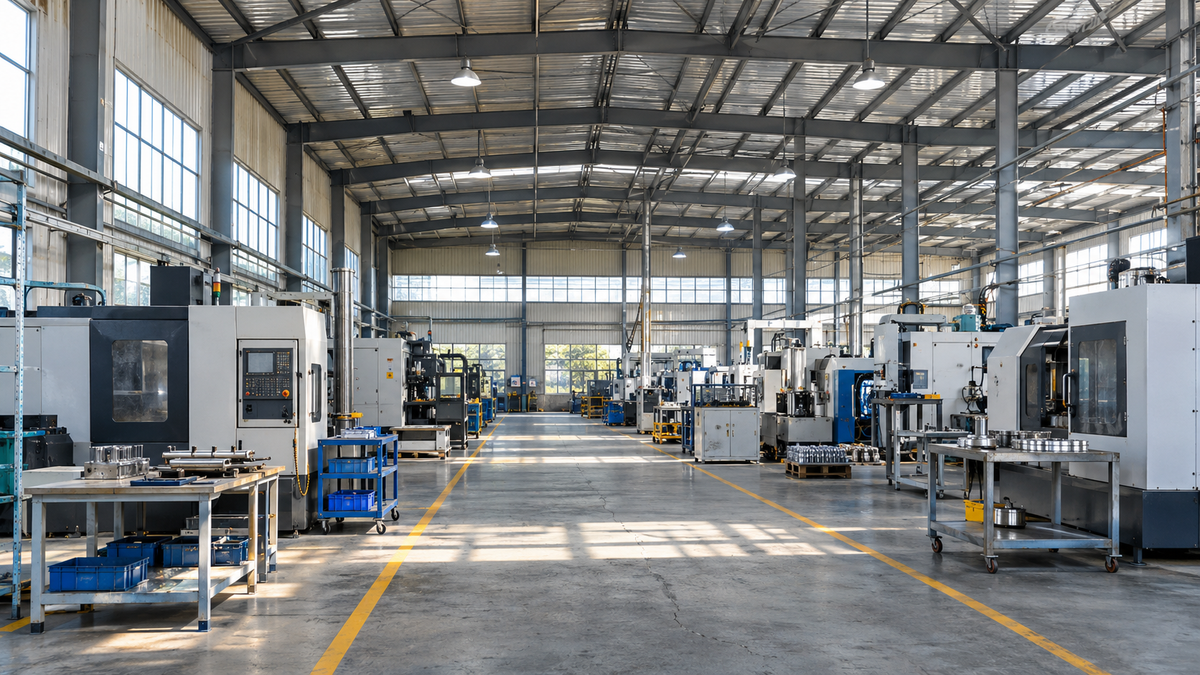
Many metal fabrication workshops have high ceilings, large production floors, and metal roofs.
Metal roofing can absorb solar radiation, while insufficient insulation allows additional heat to enter the building throughout the day.
Although high ceilings provide space for equipment and material handling, they also create challenges for effective air distribution.
Insufficient Ventilation
Without properly designed ventilation, heat can accumulate around production equipment and occupied working areas.
Roof ventilators and exhaust fans may help remove excess heat, but increasing airflow alone may not provide sufficient cooling when outdoor temperatures are already high.
Outdoor Climate Conditions
Factories located in Southeast Asia, the Middle East, and other hot regions may experience prolonged periods of elevated outdoor temperatures.
In hot and humid climates, conventional direct evaporative cooling becomes less effective because the outdoor air already contains substantial moisture.
Effective metal fabrication workshop cooling therefore requires an approach that considers both internal heat generation and outdoor climate conditions.
2. Common Cooling Methods for Metal Fabrication Workshops
Different metal fabrication workshop cooling methods offer different levels of temperature control, energy consumption, and installation complexity.
Understanding their advantages and limitations helps factory owners select an appropriate solution.
Natural and Mechanical Ventilation
Roof ventilators, exhaust fans, and wall-mounted ventilation systems can help remove accumulated heat and introduce outdoor air.
Advantages:
-
Relatively simple installation
-
Suitable for removing excess heat
-
Can improve general air circulation
-
May be integrated with existing factory ventilation systems
Limitations:
-
Cannot reliably cool incoming air below outdoor temperature
-
Cooling performance depends on outdoor conditions
-
May not provide sufficient relief during extremely hot weather
Ventilation remains essential in metalworking facilities, particularly where welding fumes and airborne contaminants must be controlled.
However, general ventilation alone may not achieve the desired indoor temperature.
Direct Evaporative Cooling
Direct evaporative coolers reduce air temperature by passing outdoor air through wetted cooling media.
As water evaporates, it absorbs heat from the incoming air, reducing its dry-bulb temperature while increasing its moisture content.
Advantages:
-
Effective cooling potential in hot, dry climates
-
Can provide large volumes of cooled air
-
Often requires less electrical energy than conventional compressor-based cooling under suitable conditions
Limitations:
-
Cooling effectiveness decreases as outdoor humidity increases
-
Adds moisture to the supplied air
-
Supply air temperature is limited by outdoor wet-bulb conditions
-
Requires appropriate ventilation and exhaust airflow
For metal fabrication workshop cooling in humid regions, direct evaporative cooling alone may not consistently achieve the required indoor conditions.
Conventional DX Air Conditioning
Direct expansion (DX) air conditioning uses a refrigerant-based refrigeration cycle to remove heat from the air.
Unlike direct evaporative cooling, DX systems can provide cooling under a wider range of outdoor humidity conditions.
They can also provide dehumidification when properly designed and operated.
However, cooling an entire large industrial workshop can require substantial refrigeration capacity and electricity consumption, particularly where doors remain open or large quantities of outdoor air are introduced.
Hybrid Evaporative Cooling with DX Refrigeration
Hybrid cooling systems combine evaporative cooling technology with mechanical refrigeration.
The evaporative cooling section supports the cooling process under suitable operating conditions, while the DX refrigeration system provides mechanical cooling.
Depending on the equipment configuration, evaporative cooling may assist the refrigeration system's heat rejection process rather than directly adding moisture to the supply air.
This combination provides an alternative to relying entirely on direct evaporative cooling or conventional DX refrigeration.
For industrial facilities facing changing temperatures and humidity levels, hybrid cooling is an option worth evaluating.
3. How Does Hybrid Evaporative Cooling Work?
Hybrid evaporative cooling combines evaporative cooling technology with a mechanical refrigeration cycle.
The exact operating process depends on the system's design, heat exchanger arrangement, and control strategy.
Stage 1: Evaporative Cooling Assistance
In an evaporative-assisted refrigeration system, water evaporation helps remove heat from the relevant heat exchange or heat rejection process.
Under suitable outdoor conditions, this can improve heat rejection and potentially reduce the refrigeration system's energy requirements.
The actual benefit depends on outdoor temperature, humidity, water conditions, and system design.
Stage 2: DX Refrigeration
The DX refrigeration circuit uses a compressor, refrigerant, and heat exchangers to provide mechanical cooling.
This allows the system to deliver cooling beyond the limits of direct evaporative cooling alone.
The refrigeration circuit's operating performance depends on the cooling load, ambient conditions, and equipment controls.
Stage 3: Conditioned Air Distribution
Conditioned air is distributed into the industrial workspace through a suitable air distribution arrangement.
Proper airflow design is essential for delivering cooling to occupied areas and reducing uneven temperature distribution.
For large workshops, air distribution should account for ceiling height, equipment placement, workstations, and existing ventilation systems.
Hybrid technology offers another approach to metal fabrication workshop cooling, particularly where both cooling performance and operating costs are important considerations.
Related reading: Hybrid Evaporative Cooling Air Conditioner: How Does It Work?
4. Why Consider Hybrid Cooling for Metal Fabrication Factories?
Metal fabrication workshop cooling requirements can change significantly with outdoor weather conditions, production schedules, and internal heat loads.
Hybrid evaporative cooling