Overview
Energy Recovery Ventilation (ERV) systems are commonly used in North American residential and light multi-unit projects to provide continuous ventilation while reducing heating and cooling energy loss.
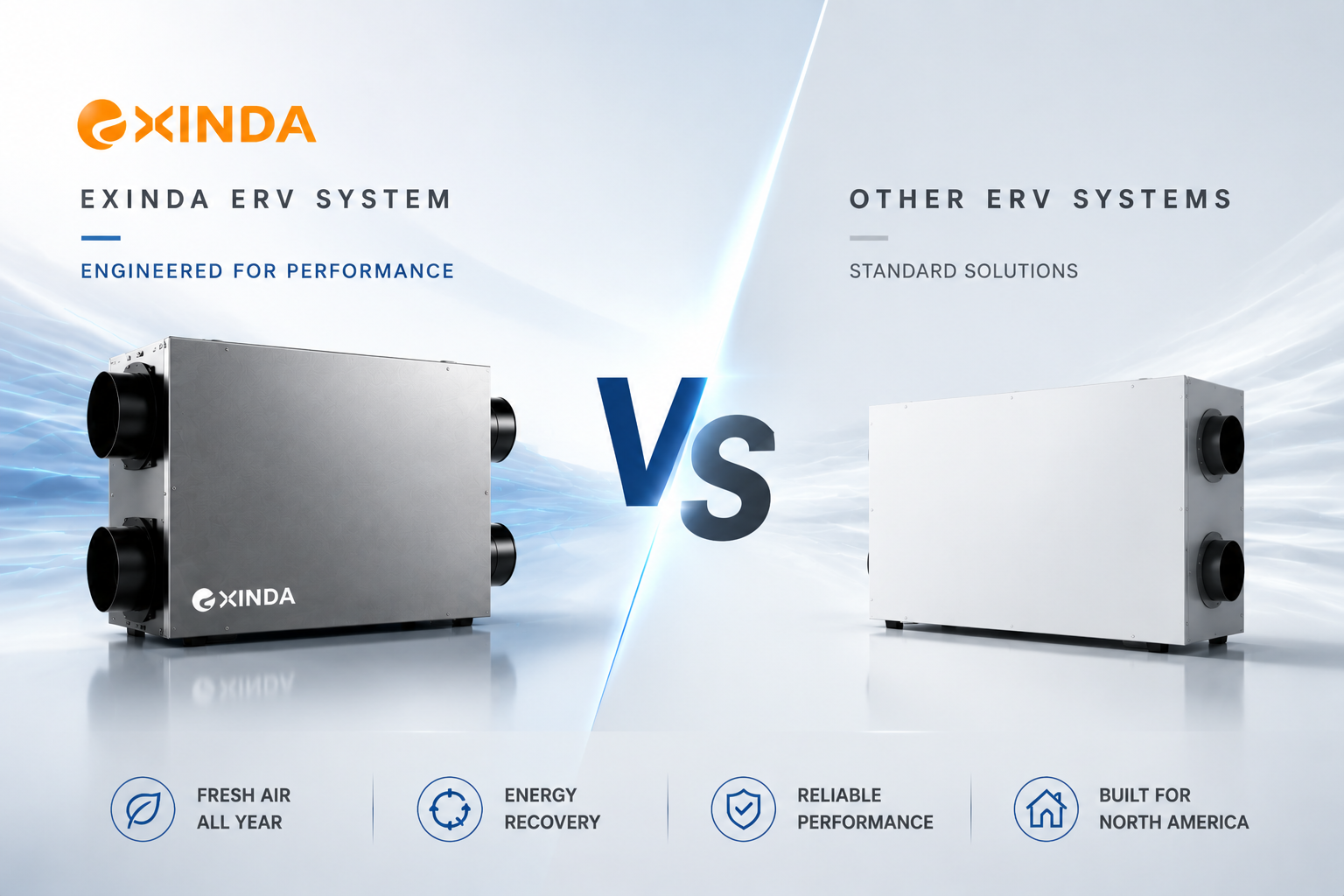
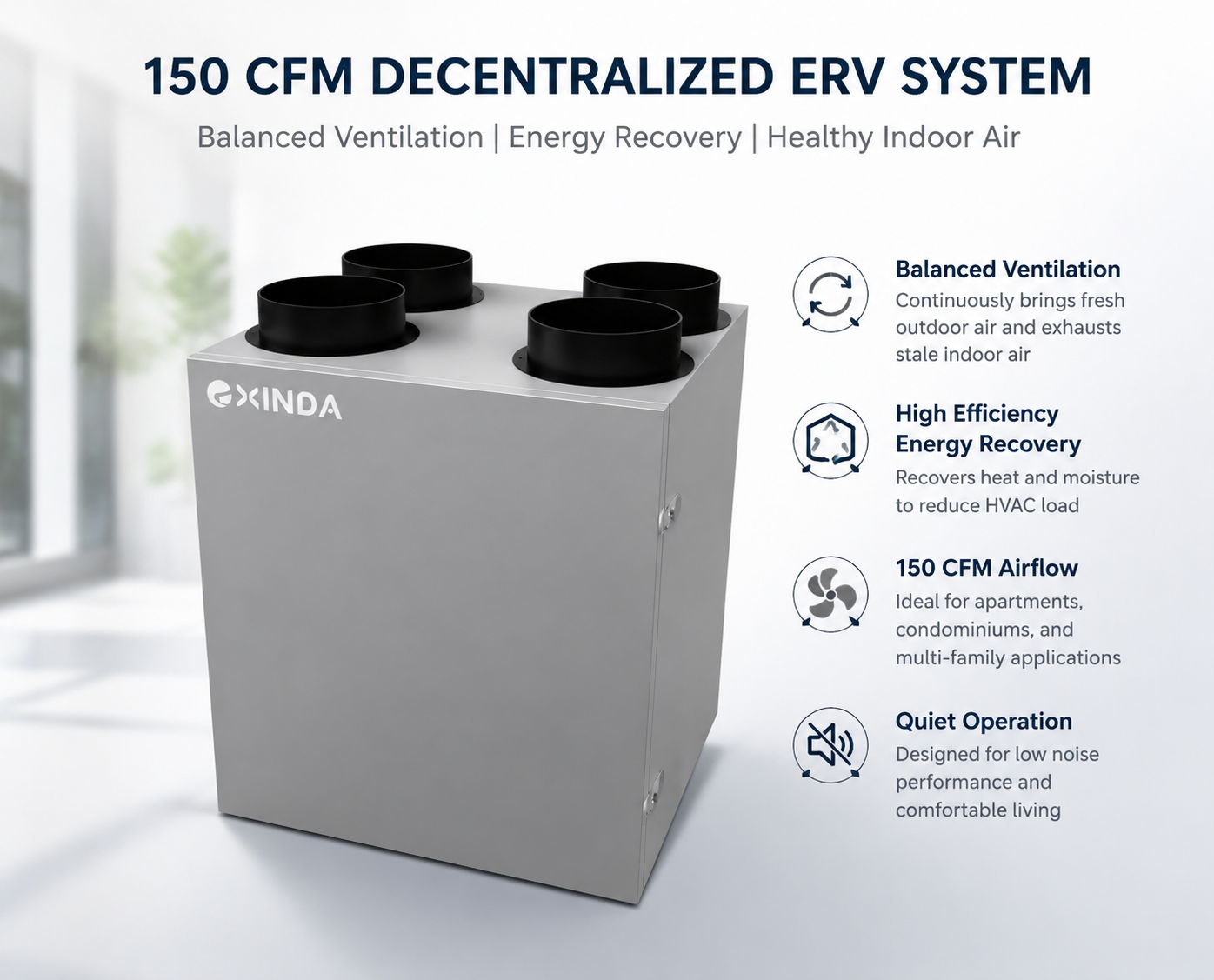
This article compares two 150 CFM class decentralized ERV systems:
- EXINDA IWMBCOFF1AYE ERV
- Broan-NuTone ERV
Both products are used in similar residential ventilation applications and are typically selected based on airflow, static pressure performance, efficiency, installation requirements, and compliance standards.
Product Positioning
- Both EXINDA and Broan are decentralized ERV systems used in residential ventilation projects in North America.
- Typical applications include:
- Apartments
- Condominiums
- Light multi-family buildings
- Both systems are designed for balanced mechanical ventilation and are commonly used in ceiling or wall-mounted installations.
Key difference in positioning:
- EXINDA: wider airflow operating range for variable project conditions
- Broan: standard residential ERV design with fixed nominal airflow (~150 CFM)
Airflow Performance
- Both units operate in the 150 CFM ERV class
- EXINDA:
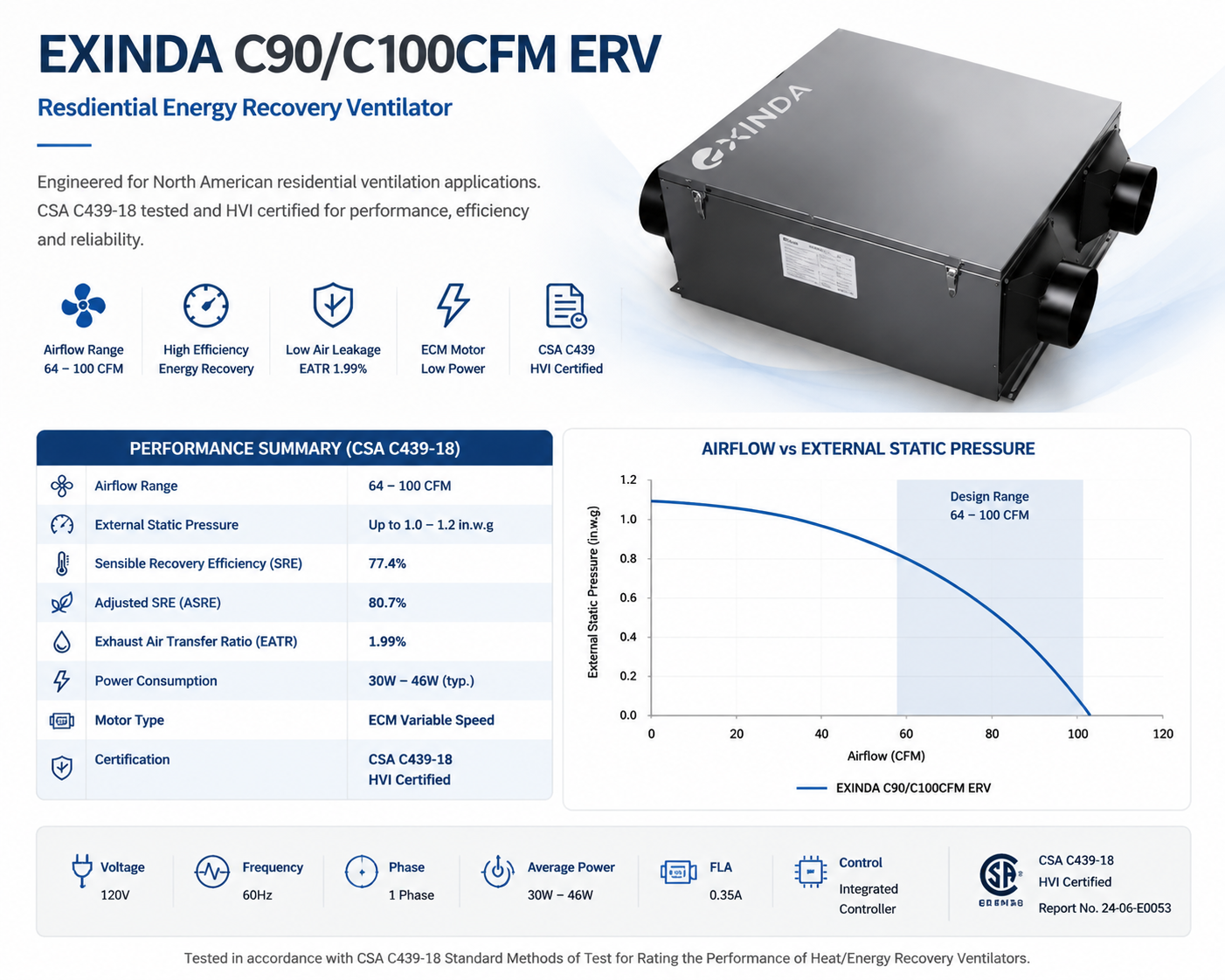
- Airflow range: 57–152 CFM
- Supports variable speed operation
- Broan:
- Nominal airflow: ~150 CFM
- Fixed-class residential operation
Summary:
- Both systems meet similar ventilation demand levels
- EXINDA provides broader airflow modulation flexibility
Static Pressure Performance
- Both systems are designed for residential duct pressure conditions
- EXINDA:
- Designed for wider static pressure adaptability
- Suitable for variable duct resistance systems
- Broan:
- Optimized for standard residential duct layouts
- Stable performance under typical conditions
Summary:
- Both are suitable for residential HVAC systems
- Final selection depends on duct design and pressure conditions
Energy Recovery Efficiency
- Both systems recover heat from exhaust air to reduce HVAC load
- EXINDA:
- Heat recovery: approx. 77%–81% (adjusted range)
- Cooling recovery: mid-60% range depending on conditions
- Broan:
- Typical residential ERV efficiency range (industry standard level)
Summary:
- Both support energy-efficient ventilation requirements
- EXINDA is positioned in a higher adjustable efficiency range depending on operation conditions
Control and System Features
- Both systems use ECM motor technology for energy-efficient operation
- EXINDA:
- Constant airflow control
- Auto-balancing function
- Designed for stable airflow under varying duct conditions
- Broan:
- Multi-speed airflow control
- Standard residential ERV operation mode
Summary:
- Both are suitable for residential ventilation systems
- EXINDA focuses on airflow stability control under variable conditions
Installation and Electrical Data
- Both systems are designed for North American residential electrical standards
- Shared specifications:
- 120V / 60Hz power supply
- Ceiling or wall-mounted installation
- Standard residential duct connections
- EXINDA:
- Power consumption up to approx. 180W depending on operation
Summary:
- Installation complexity is similar for both systems
- Maintenance access designed for residential service requirements
Engineering Summary
From a system design perspective, both products are suitable for decentralized ERV applications in residential buildings.
EXINDA
- Wider airflow operating range
- Designed for variable duct resistance conditions
- Auto-balancing airflow control system
- Suitable for projects with more complex duct layouts
Broan
- Fixed airflow residential design
- Widely used in standard residential installations
- Straightforward installation and maintenance approach
FAQ
Q1: Are EXINDA and Broan ERV systems in the same category?
Yes. Both are decentralized ERV systems used in residential and light multi-family ventilation applications.
Q2: What is the main technical difference between the two?
The main difference is airflow modulation range and system control approach, with EXINDA offering a wider operating range and auto-balancing function.
Q3: Do both systems meet North American certification standards?
Yes. Both comply with HVI and CSA/UL certification requirements.
Q4: Can both be used in apartment projects?
Yes. Both are used in apartment and residential ventilation applications depending on project design requirements.
Q5: What makes EXINDA more suitable for complex projects?
Its constant airflow control, auto-balancing system, and wider operating range.
Q6: Which system is easier to install?
Both are designed for standard residential installation. Project complexity depends more on duct layout than equipment type.
Contact
For technical support, project evaluation, or engineering documentation requests, please contact EXINDA.
Our team supports HVAC engineers, contractors, and distributors in North America with product selection and system integration.
EXINDA HVAC Systems
Email: info@exindagroup.com
Response time is typically within 24 hours for project and technical inquiries.